

Tinubu inaugurates state police committee, names Gbajabiamila, AGF, others as members
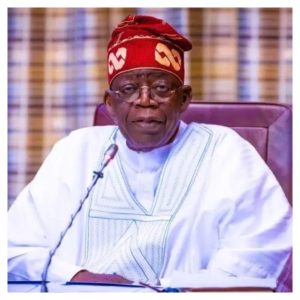 President Bola Tinubu has inaugurated the Presidential Working Group on the National Policing Bill to develop the legal framework for the implementation of state police across Nigeria.
The committee was inaugurated on Tuesday at the Presidential Villa, Abuja, by the President’s Chief of Staff, Femi Gbajabiamila, who represented Tinubu at the event.
The inauguration followed the Senate’s passage of the Constitution Alteration (State Police) Bill, 2026, which proposes a dual policing structure comprising the Federal Police Service and 36 State Police Services.
Tinubu said the constitutional amendment would provide the foundation for state police, while the proposed National Policing Bill would establish the legal framework needed to operationalise the system.
“The Constitution Amendment Bill establishes the framework for dual policing, but it does not operationalise it. That work is left to the National Policing Bill,” the President said.
He explained that the proposed legislation would address key areas including minimum policing standards, state readiness certification, federal-state coordination, accountability, human rights safeguards and personnel transition.
Tinubu said the committee’s responsibility was to produce an implementation-ready draft bill that would be transmitted to the National Assembly immediately after the constitutional amendment process.
“We must not wait until the constitutional process is concluded before beginning this important assignment,” he said.
Gbajabiamila will serve as chairman of the committee, while members include the Attorney-General of the Federation and Minister of Justice, Lateef Fagbemi; National Security Adviser, Nuhu Ribadu; Inspector-General of Police, Kayode Egbetokun; President of the Nigerian Bar Association, Afam Osigwe; Chairman of the Nigeria Governors’ Forum, Dapo Abiodun; Chairman of the NGF Committee on State Police, alongside a secretariat.
Fagbemi described the initiative as timely, given the country’s security challenges, urging stakeholders to work together to ensure its success.
“There is no denying the fact that we are in a critical moment security-wise, and all hands must be on deck,” he said.
The Attorney-General also appealed to state governors to ensure the speedy ratification of the constitutional amendment by their respective Houses of Assembly.
Meanwhile, NBA President Afam Osigwe expressed support for the creation of state police, arguing that Nigeria’s security challenges require a more decentralised policing structure.
“Nigeria can hardly be effectively policed by one national police. We fully support the constitutional amendment providing for state police,” he said.
However, Osigwe warned against possible abuse, stressing the need for strong legal safeguards.
“We must ensure we do not create a monster. The right legal framework must guarantee accountability and prevent oppression,” he added.
Speaking on behalf of the Nigeria Governors’ Forum, Ogun State Governor Dapo Abiodun pledged governors’ commitment to ensuring the speedy passage of the amendment at the state level.
Abiodun said governors planned to approve the bill simultaneously once it reaches their respective state assemblies.
“The plan is that when the bill gets to our various Houses of Assembly, we will all pass it on the same day,” he said.
The governor described state police as a response to Nigerians’ long-standing demand for community-based policing and said the reform would remove policing from the Exclusive Legislative List.
He also cited regional security outfits such as Amotekun in the South-West as examples of the effectiveness of community-based security structures.
According to Abiodun, if each state deploys about 6,000 personnel, the initiative could add nearly 200,000 officers to complement the existing federal police structure.
He commended the President for beginning implementation planning before the completion of the constitutional amendment process, describing the move as a sign of preparedness for the reform.