

Reps Move to Replace 2007 Statistics Law With New Data Framework
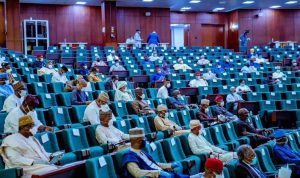 The House of Representatives has begun legislative action to repeal the Statistics Act, 2007, and replace it with a new legal framework aimed at modernising Nigeria’s statistical system in line with current digital and economic realities.
Speaking at a public hearing on the Statistics Bill, 2025, in Abuja on Monday, Speaker of the House, Tajudeen Abbas, said the proposed law would strengthen the National Statistical System and enhance the capacity of the National Bureau of Statistics (NBS) to deliver timely and reliable data.
Abbas described the bill as a comprehensive reform of the country’s data architecture, noting that the existing law was enacted under vastly different technological conditions.
He said the proposed legislation would improve coordination among statistical agencies, strengthen data quality assurance, promote digital data collection and dissemination, and ensure sustainable funding for the NBS.
According to him, credible statistics remain central to governance, economic planning, resource allocation and policy evaluation, adding that accurate data is essential for national development.
Abbas also urged stakeholders to contribute to the legislative process to ensure the bill promotes data privacy, accessibility, credibility and integrity.
At the hearing, the Statistician-General of the Federation and CEO of the NBS, Adeyemi Adeniran, said the reform is necessary due to rapid changes in the global data ecosystem.
He noted that technologies such as artificial intelligence, machine learning, big data analytics, geospatial systems and digital administrative platforms have transformed how data is generated and used worldwide.
Adeniran said the bill contains eight parts and 42 clauses covering governance, institutional arrangements, data collection and management, confidentiality, accountability, funding and stakeholder coordination.
He expressed confidence that the new law would strengthen Nigeria’s statistical system and improve the availability of reliable data for planning, policy formulation, implementation, monitoring and evaluation.
Stakeholders from government agencies, academia, civil society and the private sector also participated in the hearing and are expected to submit recommendations as the bill advances through the legislative process.
The Statistics Bill, 2025, is expected to establish a modern, technology-driven framework to support national development planning and improve Nigeria’s competitiveness in the global data economy.