

2027: AI-generated fake news may threaten Nigeria’s democracy, Lai Mohammed warns
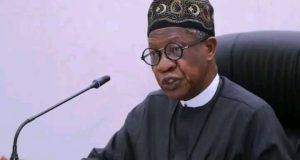 Former Minister of Information and Culture, Lai Mohammed, has warned that the growing use of Artificial Intelligence (AI) could worsen the spread of fake news and disinformation ahead of the 2027 general elections, posing a serious threat to Nigeria’s democracy and public trust.
Mohammed gave the warning on Wednesday while delivering a public lecture titled, ‘Fake News, Disinformation and Artificial Intelligence: Defending Truth and Public Trust in the Digital Age’, at Caleb University, Lagos.
He expressed concern that fabricated audio recordings, manipulated photographs, artificially generated videos and fake government documents could be deployed to mislead voters, manipulate public opinion and heighten political tensions during the forthcoming elections.
The former minister said his experience in government had exposed how social media platforms could be exploited to influence public perception, particularly during politically sensitive periods.
He recalled that ahead of the 2023 general elections, his ministry engaged major technology companies, including Google and Meta, over the increasing circulation of misinformation and fake news on their platforms.
According to him, the discussions focused on the activities of parody accounts, cloned media platforms, manipulated campaign speeches, altered photographs and videos, fabricated opinion polls, as well as exaggerated reports of threats and electoral violence.
Mohammed warned that such materials could distort voters’ understanding of political candidates, discourage electoral participation and trigger unnecessary tensions.
He noted that the speed at which information spreads on social media often makes it difficult to contain false narratives before they reach millions of people.
“The speed of social media means that by the time a falsehood is debunked, millions of people may already have seen it,” he said.
He, however, cautioned the government against using the fight against disinformation as an excuse to suppress freedom of expression, stressing the need to distinguish deliberate falsehoods from genuine mistakes, criticism and satire.
According to him, democratic governments must prioritise transparency, credibility and timely access to verifiable information rather than expect citizens to accept official statements without questioning them.
“A democratic government must not demand that citizens believe everything it says. Its responsibility is to make accurate, timely and verifiable information available and to give citizens the tools to assess competing claims,” he said.
The former minister also urged journalists to strengthen their fact-checking and verification processes, while calling on universities to incorporate media literacy into their academic programmes.
He advised Nigerians to cultivate the habit of verifying information before sharing it, warning that social media algorithms often amplify sensational content regardless of its accuracy.
Mohammed further cautioned against relying on verification badges, professionally designed graphics and video recordings as automatic proof of authenticity.
“Virality is not evidence of truth. A blue tick is not proof of truth. A professional-looking graphic is not proof of authenticity. A video is no longer automatically conclusive proof,” he said.
While acknowledging the dangers associated with artificial intelligence, Mohammed said the technology should not be portrayed as an enemy, noting that it could also be deployed to detect manipulated content and improve information management.
He explained that AI could assist journalists in analysing large volumes of information, help researchers identify emerging patterns, support fact-checking organisations, facilitate translation into different languages and improve government communication.
“The question is therefore not, ‘Should we stop AI?’ We cannot. The better question is, ‘How do we govern, deploy and use AI responsibly?’” he said.
He called for collective action involving governments, technology companies, universities, media organisations and citizens to ensure responsible use of artificial intelligence and protect public trust in democratic institutions.
The warning comes as political activities and preparations gradually intensify ahead of the 2027 general elections, raising fresh concerns about the potential use of digital technology to manipulate electoral narratives and influence voters.