

Obasanjo: Nigeria’s Debt Worse Than Leprosy, Destroys Generations
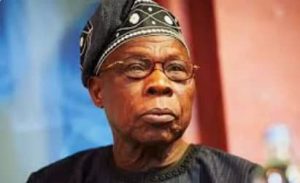 Former President Olusegun Obasanjo has criticised President Bola Tinubu’s position that borrowing is not leprosy, arguing that excessive debt is worse than the disease because its consequences affect generations yet unborn.
Obasanjo, who secured about $30bn in Paris Club debt relief for Nigeria during his administration between 1999 and 2007, said while leprosy affects an individual, unsustainable borrowing threatens the future of entire generations.
He spoke on Friday at the third Ajibosin Annual Symposium, themed “Leveraging Artificial Intelligence to Solve Grassroots Problems and Accelerate National Development”, held at the amphitheatre of the Olusegun Obasanjo Presidential Library in Abeokuta, Ogun State.
Tinubu had recently defended his administration’s borrowing, saying that debt was not leprosy and that the government only needed to work hard to repay whatever it borrowed.
But Obasanjo described the argument as “absolute nonsense”, questioning Nigeria’s growing debt burden and the capacity of its leaders to manage the economy.
The former President also criticised the policies of the World Bank and the International Monetary Fund, arguing that the institutions were not established to promote Nigeria’s national development and prosperity.
Citing agricultural subsidies in developed countries, Obasanjo recalled an encounter with former British Prime Minister, James Callaghan, whom he said received government support for his sheep farming.
He argued that while developed countries supported their agricultural sectors, Nigeria was often discouraged from adopting similar policies on the grounds that doing so could affect its access to funding from international financial institutions.
Obasanjo questioned Nigeria’s reliance on policy recommendations from institutions whose priorities, he argued, might not align with the country’s interests.
He said, “How can Iyabo be the one who will tell me how I will run my home? These brilliant boys will package everything very well academically. They tell us, and we take it, lock, stock, and barrel, and we use it. For a country of 250 million people, it is boys and girls who are not even married, let alone manage a home, who will tell us what we will do to manage our people, our country, and we swallow it, and we destroy ourselves.”
The former President also lamented the depreciation of the naira, questioning how the currency had fallen from its former value against the dollar to about N1,500 per dollar.
“When I started my farm 47 years ago, one naira to the dollar was one naira to one dollar 85 cents. What has Nigeria done in 47 years that we now have N1,500 naira to the dollar? What have we done?” he asked.
He further questioned the knowledge and capacity of Nigeria’s political leaders, insisting that borrowing without a clear understanding of its long-term implications could undermine the country’s future.
“For anybody to say debt is no leprosy is absolute nonsense. Debt is worse than leprosy, because leprosy destroys only one person. Debt destroys generations,” Obasanjo said.
Obasanjo Warns Against Uncontrolled AI Adoption
The former President also cautioned Nigeria against embracing artificial intelligence and other emerging technologies without understanding their implications.
He argued that technologies developed by powerful foreign countries could become tools of exploitation if African nations failed to take control of their development and application.
Obasanjo maintained that Nigeria must determine how artificial intelligence would serve its development priorities rather than allow foreign interests to dictate its technological and economic direction.
He cited the misuse of AI-generated content as an early indication of the risks associated with the technology, stressing the need for adequate safeguards.
“I don’t know too much technically about AI. But I know that anything that is not in your control can be abused against you,” he said.
Historian Warns Africa Against New Form of Exploitation Through AI
Also speaking at the symposium, historian and political commentator, Dr Umar Ardo, warned that Africa could become a victim of a new form of economic exploitation through artificial intelligence if the continent failed to control its data, technological infrastructure and intellectual property.
Ardo acknowledged that AI offered significant opportunities for economic transformation and national development but warned that adopting the technology without ownership, safeguards and local capacity could reinforce the unequal economic relationships associated with slavery, colonialism and post-independence dependency.
He recalled how Africa’s resources and labour had been exploited through successive historical periods, beginning with the transatlantic slave trade.
“For over three centuries, Africa’s principal export was human beings. The transatlantic slave trade carried roughly twelve million Africans across the ocean. The technology of that era — sailing ships, navigational compasses, and firearms that enabled this trade — was not ours. We did not build the ships, set the prices or write the ledgers, though our men, women and children filled the cargoes,” he said.
Ardo explained that during colonialism, the focus shifted from human beings to land and raw materials, including tin, coal, cocoa, palm oil, groundnuts, cotton, ivory and gold.
He argued that technologies such as railways, steam engines and mining equipment were deployed mainly to support extractive economies, with African countries supplying resources and labour while foreign interests controlled production and captured much of the value.
According to him, the pattern has continued after independence, with African countries exporting raw materials and importing finished products while depending on foreign economies for technology, expertise and industrial capacity.
He cited Nigeria’s continued export of crude oil alongside its dependence on imported refined petroleum products, as well as the dependence of cocoa-producing countries on foreign manufacturers for finished chocolate products.
“Stand back and see the arc: human beings, raw materials, unprocessed commodities and skilled labour. In every age, Africa has been the quarry and not the miner, the farm and not the factory, the source and not the beneficiary,” Ardo said.
He warned that data could become the next major commodity exploited from Africa if governments failed to establish control over its collection, processing and commercial use.
“Now comes the age of artificial intelligence, which Africa is urged to ‘leverage’. I do not dispute its arrival or its potential. I ask whether we have considered the terms of participation. Data may become the fourth commodity in this long history of extraction,” he said.
Ardo noted that data generated from African citizens, farms, hospitals, languages, businesses and public institutions was increasingly valuable, but the computing infrastructure, AI models, intellectual property and profits remained largely concentrated outside the continent.