

World Polio Day: Rotary Governor Urges Parents to Vaccinate Children
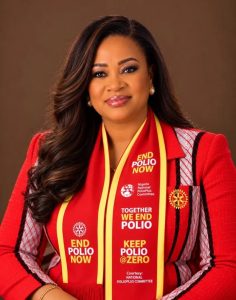 The District Governor of Rotary International District 9111, Rotarian Bukola Bakare, has urged parents and caregivers to ensure their children receive recommended polio vaccines, warning that no child should suffer paralysis from a vaccine-preventable disease.
Bakare made the call in a statement on Saturday to mark the 2026 World Polio Day, urging governments at all levels, community leaders and Nigerians to support efforts to protect every child against the disease.
“It is heartbreaking that in this day and age, a child can still become paralysed because of polio. We have vaccines that can prevent this suffering, so why should any child have to go through it?” she said.
World Polio Day is observed annually on October 24 to raise awareness about the importance of vaccination and highlight global efforts to eradicate poliomyelitis. This year’s theme is “A Chance for Reflection and a Reminder to Reach Every Last Child.”
Polio is a potentially life-threatening disease caused by the poliovirus. According to the National Primary Health Care Development Agency, parents can best protect their children by ensuring they receive complete and timely immunisation with both the oral polio vaccine and the inactivated polio vaccine.
Bakare, a mother and grandmother, stressed the importance of protecting children against irreversible paralysis, recalling Nigeria’s certification as free of wild poliovirus in 2020.
However, she warned that the achievement should not lead to complacency, as outbreaks of variant poliovirus continue to pose a threat.
“We celebrated when Nigeria was declared free of wild poliovirus, and rightly so. It was the result of years of hard work by health workers, volunteers, government agencies, Rotary members and many other organisations.
“But we must understand that being certified free of wild poliovirus does not mean we should stop vaccinating our children. The danger has not completely disappeared,” she said.
The Rotary governor noted that Rotary International began its polio eradication efforts in 1979 and launched its PolioPlus initiative in 1985. She said members had devoted time and resources to vaccination campaigns, public education and fundraising for more than four decades.
Bakare commended the World Health Organisation, UNICEF, the Global Polio Eradication Initiative, the Gates Foundation, government health agencies and other partners for supporting vaccination programmes worldwide.
She also called for greater efforts to reach children in rural and underserved communities, where access to healthcare and reliable information may be limited.
“A child living in a remote village deserves the same protection as a child living in Lagos, Abuja or any major city. We cannot afford to overlook these children simply because they are difficult to reach,” she said.
Bakare urged parents and caregivers not to allow rumours and misinformation to discourage them from vaccinating their children, advising them to seek guidance from qualified health professionals and cooperate with vaccination teams.
“Make sure your children receive all the recommended doses. Do not allow fear or rumours to put their future at risk,” she added.
Highlighting Rotary’s awareness activities, Bakare cited the Polio Boat Regatta held on October 17, 2026, jointly organised by Rotary International Districts 9111 and 9112.
She also announced a Polio Awareness Train Ride from Lagos to Abeokuta scheduled for October 31, saying the initiative would provide another opportunity to educate the public, raise funds and encourage support for polio eradication.
The Rotary governor called on corporate organisations, philanthropists and members of the public to support the End Polio Now campaign through donations, public education and efforts to encourage vaccination.
“You do not have to be a Rotarian to support the fight against polio. You can donate, help spread accurate information or encourage parents to vaccinate their children. Everybody has something to contribute. Even the smallest effort can make a difference,” she said.
She urged governments to sustain funding and support for immunisation programmes, particularly in communities where children are at greater risk of missing routine vaccinations.
Bakare also commended health workers and volunteers who travel long distances and work under difficult conditions to ensure children receive vaccines. She called on media organisations to intensify public education on polio and childhood immunisation, noting that accurate reporting could help correct misconceptions and encourage vaccination.
Expressing hope that polio would eventually be eradicated worldwide, she urged Nigerians to sustain their efforts.
“On this World Polio Day, my appeal is simple: please vaccinate your children, encourage others to do the same, and support the efforts to end polio. We have come a long way, and we must finish the job,” she said.
Bakare reaffirmed Rotary International District 9111’s commitment to polio eradication and called on Nigerians to help make a polio-free world a reality.