

2027: Adeleke’s Tinubu Alliance Rocks Accord as Candidates Eye ADC-Led Opposition Coalition
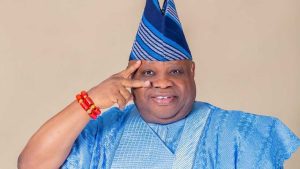 Governor Ademola Adeleke’s alliance with President Bola Tinubu has reportedly triggered discontent within the Accord Party in Osun State, with some stakeholders considering cooperation with the African Democratic Congress (ADC)-led opposition coalition ahead of the 2027 general elections.
Adeleke won the August 15, 2026 governorship election on the Accord platform after leaving the Peoples Democratic Party (PDP). His subsequent appointment as Osun State Coordinator of Tinubu’s 2027 presidential campaign has raised questions about the implications for Accord’s legislative candidates, particularly those seeking seats in the National Assembly and State House of Assembly.
Sources who spoke on condition of anonymity said some candidates feared becoming sacrificial lambs in an arrangement that allows Adeleke to pursue his presidential preference while they defend Accord’s interests at the legislative level. They questioned whether candidates should remain bound by strict party loyalty when the governor is supporting a presidential candidate from another party, the All Progressives Congress (APC).
“The concern is that the governor appears to have the freedom to pursue his political interests, while other members are expected to remain completely loyal to the party’s candidates,” one source said. “Some people are beginning to question whether the same political flexibility should not apply to everybody.”
The reported discontent has also drawn criticism from Accord leaders outside Osun. In an open letter reported on October 15, two Lagos Accord leaders urged Adeleke to clarify his political allegiance, arguing that his campaign role could create uncertainty for the party’s candidates.
However, Osun Accord chairman Pastor Victor Akande urged members to view the appointment as an opportunity for political engagement and cooperation in the broader interest of the state.
Candidates Consider ADC Coalition
Amid the tensions, some Accord candidates are reportedly examining political consultations or cooperation with the ADC-led opposition coalition to protect their interests in their constituencies.
A party source said the discussions reflected concern about how Adeleke’s presidential campaign role might affect his relationship with Accord candidates. “If the governor can work with the APC at the presidential level, some candidates believe they should also have the freedom to explore political arrangements that protect their interests,” the source said.
The identities of the candidates have not been independently established, and no formal agreement between them and the ADC-led coalition has been verified. It remains unclear whether the discussions will produce a formal alliance or remain individual options.
One stakeholder described the situation as a possible sign that the 2027 elections could see increased anti-party activity, as politicians weigh personal interests against party directives. However, the claim does not establish that such activities will become widespread; their extent will depend on decisions by individual politicians and party structures.
Concerns Over Election Violence and Political Sacrifice
Some Accord loyalists remain aggrieved over allegations of violence during the build-up to the governorship election. One source alleged that Accord supporters were killed in Ilesa, Osogbo, Ede, Esa Oke and Ikire, and that some victims were attacked by individuals believed to be APC supporters.
The allegations have not been independently established and do not constitute proof of responsibility by any party or its members. Nevertheless, the source questioned Adeleke’s decision to work with APC leadership, while another party member said grassroots supporters were struggling to reconcile their campaign experiences with the governor’s new alignment.
A separate source criticised Adeleke’s reported participation in the inauguration of the APC Presidential Campaign Council in Abuja, saying it had deepened disappointment among some loyalists. Critics fear that the alliance could leave legislative candidates without the unity and support they expected from the party leadership.
The allegation that Adeleke intends to sacrifice party members remains an interpretation attributed to his critics. His decision to work with Tinubu, by itself, does not establish an intention to undermine Accord candidates.
Group Defends Adeleke-Tinubu Relationship
The socio-political group Osun Leaders of Thought defended Adeleke’s relationship with Tinubu, saying closer cooperation with the Federal Government could improve Osun’s access to development projects, social investment and poverty-alleviation programmes.
In a statement issued by its representative, the group said political engagement need not prevent accountability for electoral violence. It also argued that cooperation could help address the lingering local government crisis and improve transparency in the administration of federal social investment funds intended for Osun residents.
The position contrasts with concerns among some Accord loyalists that the alliance could weaken internal cohesion and the prospects of legislative candidates. Supporters see it as a route to stronger federal cooperation, while critics want assurances that party members and candidates will not be disadvantaged.
Chairman Unavailable for Comment
Efforts to reach Accord chairman Pastor Victor Akande for comment on the reported discontent, the alleged moves toward the ADC-led coalition and claims of possible anti-party activity proved abortive as of the time of filing this report.
A Test of Accord’s Unity
Adeleke’s relationship with Tinubu has opened a debate within Accord over political loyalty, internal discipline and the freedom of candidates to pursue their interests.
While some stakeholders support cooperation with the Federal Government, others are reportedly considering alternative alliances, including with the ADC-led opposition coalition. It remains unclear whether the disagreement will lead to formal alliances, defections or individual decisions at the ballot box.
As the 2027 elections approach, Adeleke faces the challenge of maintaining Accord’s cohesion while pursuing his new political partnership. The central question is whether the party can reconcile competing interests or whether disputes over political loyalty will drive candidates toward alternative arrangements.