

315 abducted Nigerians rescued in 24 hours
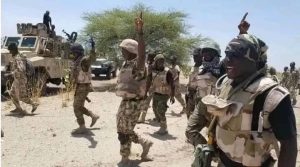 No fewer than 315 Nigerians abducted by terrorists and kidnappers have been rescued in separate operations across Kwara, Niger and Ogun states within 24 hours, bringing relief to hundreds of affected families.
The figure comprises 308 victims rescued from terrorist captivity in the forests of Kwara and Niger states and seven students of Gateway ICT Polytechnic, Saapade, in Ogun State, who were abducted last week.
Of the 308 victims rescued from the Kainji Lake National Park, 163 were from Kwara State and 145 from Niger State. Many of them were women and children, including a breastfeeding baby.
The victims were abducted during attacks on Woro community in Kaiama Local Government Area of Kwara State and neighbouring communities in Niger State on February 3 and 4, 2026.
The victims were reportedly rescued during a special operation in the Kainji Lake National Park and taken to Wawa Cantonment in Borgu Local Government Area of Niger State, where they were undergoing screening and receiving medical attention.
The Commander, 22 Brigade, was coordinating their feeding, treatment and temporary accommodation pending their evacuation.
Arrangements had also been concluded for the victims to return to their communities, with buses positioned at Sobi Cantonment in Ilorin to evacuate those from Kwara State.
President Bola Tinubu, while welcoming the development, commended the security personnel involved in the operation and directed relevant authorities to strengthen early-warning mechanisms, community-level intelligence gathering and rapid-response capabilities to prevent further mass abductions.
Meanwhile, Ogun State Governor, Dapo Abiodun, on Thursday announced the rescue of seven students of Gateway ICT Polytechnic, Saapade, in Remo North Local Government Area.
The students were abducted on July 29.
Abiodun, who disclosed their rescue while briefing journalists at the Oke-Mosan Governor’s Office in Abeokuta, said no ransom was paid for their release.
He commended security agencies, local hunters, vigilantes and other stakeholders involved in the operation.
According to him, he had contacted the Inspector-General of Police, Olatunji Disu, to request aerial surveillance to complement the ground operation.
“I reached out to the Inspector-General of Police, IGP Olatunji Disu, to deploy aerial surveillance to complement the ongoing ground operations. I am pleased that he responded immediately by approving and deploying a police helicopter the same day,” Abiodun said.
The governor explained that five of the victims were rescued during the first phase of the operation and reunited with their families after receiving medical attention, while the remaining two were rescued in a subsequent operation involving the police helicopter and ground forces.
One of the victims sustained a gunshot injury but was evacuated for treatment and has since been stabilised.
Abiodun disclosed that two suspects had been arrested while security agencies continued to track other members of the gang.
“As of this moment, two of the kidnappers have been arrested, while our security agencies remain on the trail of the remaining members of the criminal gang. The operation is still ongoing, and for operational reasons, some details cannot yet be disclosed,” he said.
He warned that the state would not provide a safe haven for kidnappers and other criminal elements.
“There will be no hiding place for kidnappers or any other criminals in Ogun State. Whether they are principal offenders, collaborators, informants, logistics providers or sponsors, they will be identified, arrested and prosecuted in accordance with the law,” Abiodun stated.
Reacting to the rescue of the 308 victims, UK-based Nigerian medical doctor and social affairs analyst, Dr Chinwike Oke-Nwosu, called for stronger intelligence capabilities, particularly in tracking communications used by criminal groups.
He questioned how terrorists could continue to use telephones to communicate while holding victims in captivity.
Retired Rear Admiral Dickson Olisemelogor described the rescue as a welcome development, saying it could reflect improved cooperation between affected communities and security agencies.
“It shows that members of the affected communities are getting tired of the activities of the terrorists and are willing to cooperate with security agencies. The security agencies are now allowed to do their jobs as it should be,” he said.
He also argued that kidnapping could become less lucrative if governments maintained a policy of refusing to pay ransom.
Similarly, the Executive Director of the Rule of Law and Accountability Advocacy Centre, Okechukwu Nwagunma, commended the rescue but cautioned that rescue operations should not replace effective prevention.
“The rescue of 308 victims after a six-month operation in the forests spanning parts of Kwara and Niger States is welcome news and deserves commendation. Every life saved is important, and the security personnel involved should be recognised for their efforts and sacrifices,” Nwagunma said.
He urged the government to invest further in intelligence-led policing, inter-agency coordination and protection of vulnerable communities, while ensuring adequate medical, psychological and socioeconomic support for rescued victims.
Nwagunma said the ultimate measure of success should be a sustained reduction in kidnappings and restoration of public confidence in the safety of citizens.
Senior military personnel also attributed the successful operations to sustained intelligence gathering, inter-agency cooperation and support from local communities.
They, however, stressed that the long-term objective should remain the prevention of abductions and the disruption of terrorist networks before they are able to attack communities.