

Africa must stop exporting raw materials, add value locally — Shettima
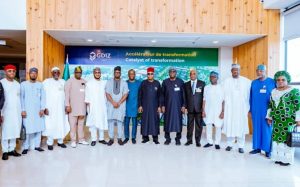 Vice President Kashim Shettima has urged African countries to end the export of raw materials and instead prioritise local processing to maximise the continent’s economic potential and strengthen its position in global trade.
Shettima made the call on Friday during a tour of the Glo-Djigbé Industrial Zone (GDIZ) in Cotonou, Republic of Benin, where he assessed the country’s integrated agro-industrial facilities.
He said Africa must leverage its abundant natural resources by building industries capable of converting raw materials into higher-value products, adding that Nigeria’s industrialisation drive under President Bola Tinubu’s Renewed Hope Agenda would involve close collaboration with state governments.
The Vice President commended Benin’s efforts in promoting local production and exports, describing the GDIZ as “an African success story” in value addition across the cotton, cashew and soya bean sectors.
Shettima lamented that Africa currently accounts for only about one per cent of the global cotton industry, valued at 370 billion dollars, stressing that reviving Nigeria’s textile value chain could generate millions of jobs, increase non-oil exports and stimulate economic growth.
“We are here essentially at the behest of President Tinubu, in the spirit of his Renewed Hope Agenda, to see and peer-review global best practices,” he said.
He added, “Be rest assured that we have learnt a lot of lessons through this visit, and we are going to replicate a lot of that in Nigeria.”
According to Shettima, the Federal Government is establishing eight agro-industrial zones across eight states to strengthen agricultural processing and manufacturing.
During the visit, the Nigerian delegation inspected facilities where locally produced cotton is processed into yarn, fabric and finished garments, as well as factories producing cashew and soya bean products for domestic and international markets.
The Vice President was accompanied by the governors of Kwara, Imo, Katsina, Plateau, Zamfara and Jigawa states.
The visit forms part of Nigeria’s efforts to adopt successful industrial models that promote value addition, attract investment and reduce dependence on raw material exports.