

Trump Threatens Higher Tariffs on Canada Over Wildfire Smoke
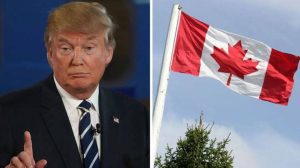 U.S. President Donald Trump has threatened to increase tariffs on Canada, accusing the country of failing to manage its forests and prevent wildfire smoke that has spread across large parts of the United States.
In a post on Truth Social on Friday, Trump described the recurring smoke pollution as “willful negligence,” saying it had become an annual problem costing the U.S. billions of dollars.
He said the cost of the pollution should be added to the tariffs Canada already pays, alleging that Canadian authorities had failed to carry out proper forest management and debris removal. Trump also said he planned to speak with Canadian Prime Minister Mark Carney about the issue.
Canada’s Emergency Management Minister, Eleanor Olszewski, said both countries remain in constant contact and have a long history of cooperating to combat wildfires. She added that Canada has invested $12 billion in forest sustainability and fire prevention since 2020.
According to the Canadian Wildland Fire Information System, 937 wildfires were active across Canada as of Saturday, with most burning out of control.
The smoke has triggered unhealthy air quality alerts across several U.S. states, with Detroit ranked the world’s most polluted city on Friday, according to air quality tracker IQAir. Washington and Chicago also recorded hazardous pollution levels.
The worsening air quality has raised concerns ahead of the 2026 FIFA World Cup final scheduled for Sunday at MetLife Stadium in New Jersey, although officials said they expect conditions to improve before kickoff.
Health experts warned that wildfire smoke contains fine particles capable of causing serious respiratory problems, while climate scientists linked the growing intensity and duration of wildfire seasons to climate change, citing rising temperatures and prolonged drought conditions.
Authorities in Canada and the United States continue to battle multiple wildfires, with evacuations ordered in affected communities and firefighting efforts complicated by changing weather conditions.