

Atiku, Obidient Movement, Others Reject FG’s 30-Day Petrol Discount
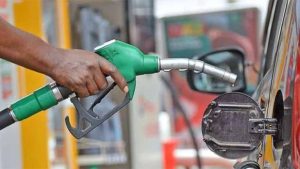 Former Vice President Atiku Abubakar, the Obidient Movement, the Nigeria Democratic Congress (NDC) and the presidential campaign organisation of Oyo State Governor Seyi Makinde have rejected the Federal Government’s proposed 30-day petrol discount, describing the intervention as inadequate and politically motivated.
The Federal Government announced on Thursday that the Nigerian National Petroleum Company Limited (NNPC) would temporarily forgo its retail profit margin on petrol sales to cushion Nigerians against rising global crude oil prices.
The Presidency, however, maintained that the initiative did not amount to a return to the petrol subsidy regime, which was removed on May 29, 2023.
The announcement has generated mixed reactions, with opposition figures criticising its timing and sustainability, while energy experts called for transparency in its implementation and financing.
The Minister of Finance and Coordinating Minister of the Economy, Taiwo Oyedele, said the arrangement would run for 30 days, with priority given to public transport operators.
“We are offering a discount on petrol dispensed by NNPC Limited for the next 30 days, with priority for public transporters nationwide,” he said.
Atiku, through a statement issued by his Director of Strategic Communication, Phrank Shaibu, described the intervention as a “panic-driven publicity stunt”.
The former vice president questioned the sustainability of the arrangement and what would happen when the 30-day period expired.
“What happens on Day 31? Nigerians wake up to the same brutal prices, the same punishing transport fares and the same rising cost of food. The government cannot manufacture relief for one month and expect Nigerians to applaud while the hardship remains,” he said.
Atiku also questioned why the discount was restricted to NNPC filling stations and demanded clarity on the amount Nigerians would save per litre and how the government would ensure that transport operators passed the savings on to passengers.
He argued that the intervention supported his proposal for production assistance tied to locally refined petrol, with safeguards to ensure consumers benefited.
“Nigerians need lasting relief, not a countdown to the return of hardship. Tinubu’s government cannot spend years telling Nigerians to endure, then offer 30 days of relief and call it a solution,” he said.
Similarly, the Obidient Movement questioned the timing of the announcement, suggesting that the intervention was linked to the 2027 general election.
In a statement by its Director of Media and Communications, Onyeka Dike, the movement questioned why the government had waited more than three years after subsidy removal to introduce the measure.
“For three years, Tinubu told Nigerians that the ‘baby steps of pain’ were necessary. Now, suddenly, a petrol discount is possible. So, what changed?” Dike asked.
He argued that Nigerians had endured high petrol prices, increased taxes, rising tuition fees and escalating food costs since the removal of the subsidy.
“The pains were never necessary. They were policy choices,” he said, urging the government to pursue sustainable reductions in the cost of fuel, food and education.
The NDC also rejected the intervention, describing it as “tokenism and a Greek gift from a government that whimsically removed fuel subsidy without proper consideration, consultation, or cushions for Nigerians”.
Its National Publicity Secretary, Osa Director, argued that the discount would not address the economic consequences of subsidy removal, including job losses and business closures.
He also questioned whether NNPC filling stations could adequately serve the population, warning that the arrangement could result in congestion and stampedes.
Meanwhile, the presidential campaign organisation of Governor Seyi Makinde’s Allied Peoples Movement (APM) described the intervention as inadequate and politically motivated.
In a statement by its Director of Strategic Communications, Richard Ihediwa, the organisation criticised what it described as a N60-per-litre discount, arguing that the reduction was insignificant compared with previous increases in petrol prices.
“It is a slap in the face of the suffering citizens that at the time they expected an impactful reduction in the astronomically high pump price of petrol, the Tinubu government came out on national media to announce an infinitesimal and ‘microscopic’ discount of N60,” the statement read.
The campaign organisation questioned why the government had introduced what it considered a marginal reduction after substantial increases in petrol prices, insisting that Nigerians deserved a more meaningful intervention.
In response to the criticism, the Presidency said the discount was part of a broader package of measures aimed at cushioning households against global energy market volatility.
In a statement signed by the Special Adviser to the President on Information and Strategy, Bayo Onanuga, the Presidency said NNPC Retail would implement the arrangement, selling petrol at its landing cost, particularly to commercial transport operators.
“This means if NNPC’s landing cost is N1,300, it will sell fuel to Nigerians, especially commercial vehicles, at the same price,” the statement read.
The government also said it was negotiating a ceiling of N1,350 per litre on the ex-gantry or landing cost of petrol. Under the proposed arrangement, refiners and importers would bear costs above the ceiling and recover the shortfall later when crude oil prices or exchange rates improved.
“This is neither a subsidy nor a price control: it is designed to smooth prices over time rather than suppressing them,” Oyedele said.
Other measures outlined by the Presidency include increased funding for cash transfers to vulnerable households, subsidised credit for small businesses and consumers, expanded compressed natural gas (CNG) deployment, and efforts to reduce multiple taxation and logistics costs.
The government also said it would consider an excess-profit tax on operators found to have taken undue advantage of consumers, with proceeds dedicated to transport support or vouchers for low-income earners.
However, the Chief Executive Officer of PetroleumPrice.ng, Jeremiah Olatide, described the petrol discount as a positive development that could provide relief and stabilise prices, although he considered the proposed N1,350-per-litre landing-cost ceiling too high.
He urged the government to consider reducing the benchmark to N1,000 per litre, saying the proposed ceiling remained unaffordable for many Nigerians.
Professor Emeritus of Petroleum Economics at the LAU Energy Institute and Chairman of the NOGEP Forum, Wumi Iledare, said the intervention could be economically justified if it remained targeted, temporary and transparent.
He said prioritising public transport operators could help reduce transport costs, provided the savings were passed on to passengers.
However, Iledare warned that the arrangement could become another form of subsidy if NNPC sold petrol below its economic cost and later received government reimbursement or accumulated liabilities ultimately borne by taxpayers.
He urged the government to disclose the discount per litre, the volume of petrol covered, the source of financing, the maximum fiscal exposure and the mechanisms for ensuring that consumers benefited.
“Nigeria has already paid heavily for poorly targeted petroleum subsidies. Any new intervention must therefore be transparent, fiscally capped, independently auditable, explicitly temporary, and subject to a clear exit plan,” he said.
Oyedele subsequently clarified that the exact discount per litre had yet to be determined, explaining that NNPC would calculate the amount based on its operating costs and margins.
The minister said the initiative would be reviewed after 30 days, expressing hope that other marketers would voluntarily reduce their margins.
He attributed the rise in petrol prices from about N830 to an average of N1,400 per litre to the Middle East conflict and warned that restoring the blanket subsidy could cost more than N20tn annually.
Oyedele also disclosed that subsidy removal had released N15.8tn to the Federation Account between June 2023 and December 2025, while the government had waived more than N3.3tn in petrol taxes and duties between January and September 2026.
The Group Chief Executive Officer of NNPC Limited, Bayo Ojulari, confirmed that the company had commenced discounting petrol prices following approvals obtained around the October 1 Independence Day celebration.
He said NNPC was prepared to prioritise economic stability and consumer welfare over immediate profitability.
Meanwhile, the Chairman of the Presidential Initiative on Compressed Natural Gas and Electric Vehicles, Ismael Ahmed, said about 120,000 vehicles had been converted to CNG, with conversion costs ranging from N230,000 to N580,000.
The Executive Secretary of the Joint Tax Board, Olusegun Adesokan, said 20 states had implemented the harmonised taxes and levies framework to address multiple taxation.
The Comptroller-General of Customs, Adewale Adeniyi, said import duties on new vehicles had been reduced from 20 to 10 per cent and those on used vehicles from 15 to five per cent, while efforts to combat petroleum smuggling were being strengthened.
The Minister of State for Petroleum Resources (Oil), Heineken Lokpobiri, defended the removal of the petrol subsidy, arguing that deregulation had encouraged private investment in domestic refining, including the Dangote Refinery.
He also maintained that restoring the subsidy would conflict with the Petroleum Industry Act, which provides for petroleum product prices to be determined by market forces.
The Minister of Information and National Orientation, Mohammed Idris, said the administration’s economic reforms were intended to strengthen public finances and improve living standards, although more work remained to ensure Nigerians felt the benefits.
The Permanent Secretary of the Federal Ministry of Finance, Raymond Omachi, also called for improved coordination among government agencies to eliminate overlapping responsibilities and unnecessary regulatory costs.