

Presidency faults Catholic bishops over criticism of Tinubu, Onaiyekan’s remarks
 The Presidency has criticised representatives of the Catholic Bishops’ Conference of Nigeria (CBCN) over their conduct during a recent meeting with President Bola Tinubu, insisting that the clerics are not the sole custodians of truth on the state of the nation.
It also faulted the Archbishop Emeritus of the Catholic Archdiocese of Abuja, Cardinal John Onaiyekan, for publicly disclosing details of the closed-door meeting, describing his comments as inappropriate and a breach of the confidentiality expected of such engagements.
The Presidency’s reaction followed comments made by Onaiyekan during an interview on Prime Time, an Arise Television programme aired on Friday, in which he disclosed details of the July 28 meeting between Tinubu and a delegation of the Catholic Bishops’ Conference of Nigeria at the Presidential Villa.
According to the cardinal, the bishops raised concerns over worsening economic hardship, insecurity and the state of democracy in the country, but the President rejected their assessment, insisting that his administration was making progress.
Onaiyekan said the memorandum presented to Tinubu reflected the collective position of the conference after extensive consultations and careful deliberations.
He stressed that the bishops had no political ambitions but were compelled by their moral obligation to speak truthfully about the suffering of Nigerians.
“We are not politicians running for office. We are religious leaders who feel we have a duty not just to preach our doctrines but also to address the lives of our people,” he said.
The cleric disclosed that the bishops told the President that prevailing economic policies were worsening the plight of ordinary Nigerians, but Tinubu maintained that the economy was improving.
“When the nation is bleeding, you cannot expect a polite meeting with the head of state. We told him the economy is not helping our poor people; he told us the economy is doing fine,” Onaiyekan stated.
He added that Tinubu appeared unhappy with the observations and suggested that many people around the President were presenting an overly positive picture of the country’s situation.
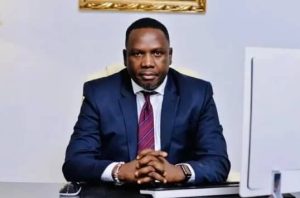
Responding, Senior Special Assistant to the President on Media and Publicity, Temitope Ajayi, said the bishops’ assessment was only one perspective and should not be regarded as beyond scrutiny or rebuttal.
Ajayi said Tinubu listened patiently to the bishops and responded with facts, arguing that the administration had recorded measurable improvements, including more regular payment of salaries and pensions.
“Their assessment is neither scripture nor an article of faith. It is a perspective, and perspectives can be challenged with facts and evidence,” he said.
Ajayi also rejected the bishops’ characterisation of Nigeria as “bleeding,” insisting that while significant challenges remained, the President had access to classified intelligence and operational reports that informed his assessment.
He added that Tinubu received daily security and economic briefings, read newspapers and consulted widely, making it inaccurate to suggest that only the bishops could acquaint him with the realities facing the country.
“The suggestion that President Tinubu somehow needs only the Catholic Bishops to acquaint him with the truth is an overreach,” Ajayi said.
Also reacting, the President’s Special Adviser on Policy Communication, Daniel Bwala, accused Onaiyekan of allowing politics to influence his comments.
Bwala alleged that the Catholic Church supported Labour Party presidential candidate Peter Obi during the 2023 election and argued that the cardinal’s intervention should be viewed in that context.
“The President was well within his right to disagree with their assertion regarding Nigeria’s economy based purely on facts, statistics and numbers,” he said.
Bwala also accused the cleric of applying a double standard by encouraging believers to make positive confessions despite hardship while criticising the government’s optimistic assessment of the economy.
Meanwhile, the Catholic Bishop of Sokoto Diocese, Matthew Kukah, who was part of the delegation to the Presidential Villa, declined to comment further on the meeting.
“I don’t have a comment to make. I was part of the delegation; how can I have a position?” Kukah said.
Separately, Lagos Central Senatorial candidate of the Nigeria Democratic Congress, Ladipo Johnson, criticised Tinubu over remarks suggesting that Nigerians experiencing hardship should seek assistance from churches.
Johnson described the President’s comments as “a shocking low point in the history of presidential communication,” accusing him of failing to demonstrate empathy towards citizens grappling with rising inflation, high food prices and declining purchasing power.