

US announces Israel-Hezbollah ceasefire amid fragile Iran peace deal
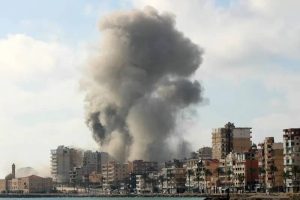 A ceasefire between Israel and Hezbollah has taken effect following mediation by the United States and Qatar, a US official has confirmed, after renewed fighting in Lebanon threatened a broader peace agreement between the United States and Iran.
The truce was announced on Friday after deadly exchanges between Israeli forces and the Iran-backed Hezbollah group raised concerns over the future of the Middle East peace deal signed earlier this week.
The ceasefire followed talks involving US and Qatari mediators with Israeli and Iranian officials. A Gulf diplomat also confirmed the agreement.
The latest violence forced the postponement of planned negotiations between the United States and Iran in Switzerland, which were expected to address unresolved issues, including Iran’s nuclear programme. Swiss authorities confirmed the talks had been delayed but said they remain ready to facilitate future discussions.
Before the ceasefire, Israel said it had carried out strikes on more than 80 Hezbollah targets in southern Lebanon, claiming dozens of Hezbollah fighters were killed. Lebanese authorities, however, said 21 people died in the airstrikes, while the Israeli military reported that four of its soldiers were killed during the fighting.
Despite the truce, tensions remain high. Israeli Prime Minister Benjamin Netanyahu had earlier insisted Israeli troops would remain in Lebanon “as long as necessary,” while National Security Minister Itamar Ben Gvir called for tougher military action.
Iranian Foreign Minister Abbas Araghchi accused Israel of seeking “permanent war,” while Iran’s chief negotiator, Mohammad Bagher Ghalibaf, warned that Tehran would not compromise on its “red lines.”
“If the enemy seeks to be excessive, we have proven that our fingers are on the trigger and we have no hesitation in giving a crushing response to the enemy,” Ghalibaf said.
The wider US-Iran agreement, signed earlier this week by President Donald Trump and Iranian President Masoud Pezeshkian, is intended to end a conflict that began in late February and restore stability across the region.
One of its key provisions included the reopening of the Strait of Hormuz, a critical global oil shipping route. Maritime data showed that 25 commercial vessels passed through the waterway on Thursday, the highest daily traffic recorded since mid-April.
The United States has also lifted its naval blockade of Iranian ports, although American warships will remain nearby to monitor compliance with the agreement.
Meanwhile, Iran’s maritime authority has directed all vessels intending to transit the Strait of Hormuz to submit requests at least 48 hours in advance, despite the reopening of the strategic waterway.