

Oil prices sink further as Trump signs deal to reopen Strait of Hormuz
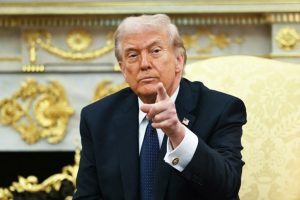 Global oil prices fell sharply on Thursday after US President Donald Trump and Iran’s leadership signed a deal aimed at ending hostilities and reopening the Strait of Hormuz, a key global shipping route for crude oil.
The agreement has fuelled optimism among investors that tensions in the Middle East may ease after more than three months of conflict that previously rattled energy markets and drove up inflation concerns.
However, gains in broader financial markets were limited as investors weighed expectations that the US Federal Reserve could still raise interest rates before the end of the year, amid persistent inflation pressures.
Trump confirmed the signing of the memorandum of understanding in Versailles after the G7 summit, saying:
“Just signed it.”
Iranian Foreign Ministry spokesman Esmaeil Baqaei, quoted by the state news agency IRNA, also confirmed the agreement, saying the document “was finalised with the signatures of the presidents.”
Attention is now focused on the Strait of Hormuz, through which about one-fifth of global oil shipments normally pass.
The waterway had been effectively closed following heightened tensions and military escalation involving the United States and Israel earlier in the year.
Pakistan’s Prime Minister Shehbaz Sharif, whose government reportedly helped mediate the talks, announced on social media that:
“As a first step, Islamic Republic of Iran will instantly reopen the Strait of Hormuz and the United States of America will immediately lift the naval blockade.”
Under the reported framework, the United States will also waive oil sanctions and support the creation of a $300 billion reconstruction fund, while Iran agrees to scale back enrichment activities as broader negotiations continue.
Crude oil prices fell by more than 1% on Thursday, extending losses seen earlier in the week after news of a possible agreement first emerged.
Both major benchmarks have now dropped more than 15% in a week, reflecting easing geopolitical risk premiums.
Analysts say the agreement has removed much of the panic-driven pricing in the market.
“A signed MOU and a faster path toward reopening the Strait of Hormuz should pull some of the panic premium out of crude,” said Stephen Innes of SPI Asset Management.
He added that oil markets had been pricing not only conflict risk, but also potential supply disruptions that could trigger an energy shortage.
While oil prices fell, global stock markets showed mixed performance.
Asian markets including Tokyo, Seoul, Singapore, Taipei and Manila posted gains, while Hong Kong, Shanghai, Sydney, Wellington and Jakarta declined.
Investor sentiment was also shaped by signals from the US Federal Reserve following its latest policy meeting.
The Fed kept interest rates unchanged but indicated it may consider hikes within the next six months due to persistent inflation.
New Fed Chair Kevin Warsh, speaking after his first policy meeting, warned that inflation remains a serious concern.
“Persistently high prices are a burden for the American people, but the recent past need not be prologue,” he said.
Warsh, appointed under Trump, also signalled interest in broad reforms at the central bank, amid ongoing political pressure over monetary policy direction.