

‘I told them the coup would fail’ — Court watches cleric’s confession video in alleged coup trial
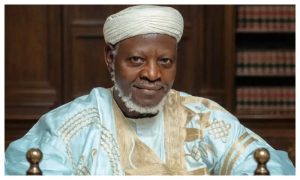 A Federal High Court in Abuja on Monday watched a video recording of the alleged confession of one of the defendants standing trial over an alleged plot to overthrow the President Bola Tinubu-led government.
The sixth defendant, Sheikh Sani Abdulkadir, an Islamic cleric, was seen in the video telling investigators that he warned the alleged coup plotters their plan would fail and that they would eventually be exposed.
The recording was played during the continuation of proceedings before Justice Joyce Abdulmalik, with the fourth prosecution witness still in the witness box.
In the video, Abdulkadir said he became acquainted with the alleged ringleader, identified as Colonel Ma’aji, through a man called Sanda, who allegedly approached him for spiritual prayers concerning the planned coup.
According to the cleric, Sanda informed him that his “oga” intended to stage a coup and wanted prayers and divination to determine whether the operation would succeed.
Abdulkadir said after carrying out prayers, he informed them that the plot would fail and that two people within the group would betray the conspirators.
He added that Sanda later returned, requesting additional prayers to prevent the alleged betrayal from happening.
The cleric further stated that money was sent to him for prayers and charity, while names of some alleged conspirators were also forwarded to him for inclusion in the prayers.
According to him, shortly after the prayers began, Sanda informed him that Colonel Ma’aji had disappeared for four days, before he later learnt through media reports that several suspects had been arrested over an alleged coup plot.
Abdulkadir maintained in the video that the money he received was strictly for prayers and not for supporting any coup attempt.
He also admitted that he understood a coup to mean a military takeover of government but claimed he did not report the matter because he did not know who to approach.
The cleric narrated that he was eventually arrested after visiting the Economic and Financial Crimes Commission over restrictions placed on his bank account.
He said he discovered the account had been flagged while attempting to withdraw part of the money allegedly sent to him.
According to him, after contacting an EFCC deputy director, he was invited to the commission’s office where he explained the source of the funds.
Abdulkadir insisted that while in EFCC custody, he never made any statement relating to a coup plot.
He also stated in the video that he was neither assaulted nor tortured and that his statements were made voluntarily.
Following the playback, the prosecution sought to tender the extra-judicial statements allegedly made by the first to fifth defendants before a Special Investigation Panel and military police authorities, as well as the sixth defendant’s statement before military investigators.
However, lawyers representing all six defendants separately objected to the admissibility of the statements and video recordings.
The defence teams argued that the statements were either not voluntarily made or were obtained in violation of provisions of the Administration of Criminal Justice Act.
Some of the lawyers also argued that their clients were denied access to legal representation during interrogation and alleged that parts of the video recordings did not correspond with the written statements being tendered.
Counsel to the fifth defendant further argued that separate trial-within-trial proceedings should be conducted for each defendant rather than a joint exercise.
The prosecution, however, urged the court to reject the objections and proceed with a single trial-within-trial for all the disputed statements.
In her ruling, Justice Abdulmalik ordered a joint trial-within-trial to determine the voluntariness and admissibility of the written and video statements of all six defendants.
The matter was adjourned until May 12, 2026, for continuation of proceedings.