

Lai Mohammed Decries Prohibitive Cost of Politics, Urges Electoral Reforms
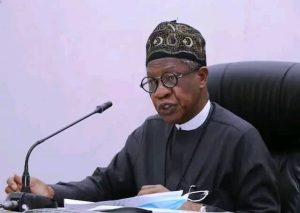 Former Minister of Information and Culture, Lai Mohammed, has raised concerns over the rising cost of political participation in Nigeria, describing it as excessively high and in urgent need of reform.
Speaking at the London School of Economics and Political Science at the weekend, Mohammed noted that the financial requirements for contesting elective offices in Nigeria far exceed what obtains in many other democracies, thereby limiting access for capable but less financially endowed aspirants.
According to him, the current structure of party financing has made the electoral process increasingly expensive, with aspirants bearing a significant burden through the purchase of nomination and expression of interest forms.
He disclosed that presidential aspirants are required to pay as much as N100 million in total for both forms. Governorship aspirants, he added, pay about N50 million, while senatorial hopefuls part with approximately N20 million.
Mohammed attributed the situation to weak party funding mechanisms, noting that political parties in Nigeria largely depend on proceeds from the sale of forms due to poor compliance with membership dues.
He said: “It is quite expensive even to enter the race, and that is an area that must be addressed. Political parties rely heavily on funds generated during election periods because there is no effective system to ensure regular payment of dues by members.”
Despite the financial barriers, the former minister maintained that opportunities still exist for young Nigerians to participate in politics, pointing out that several individuals without prior political backgrounds have risen to prominence in recent years.
Reflecting on his time in office, Mohammed said his major focus was to strengthen communication between government and citizens through innovative engagement strategies.
He explained that initiatives such as thematic town hall meetings and ministerial scorecards were introduced to facilitate interaction, feedback, and accountability.
“Effective governance requires not just speaking to the people but listening to them. Through engagement platforms, we were able to better understand public sentiment and respond accordingly,” he said.
Mohammed’s remarks come amid growing calls for electoral reforms ahead of the 2027 general elections, with stakeholders advocating measures to make the political process more inclusive and less financially restrictive.