

Fayose’s Reckless Alarmism and a Word for Makinde- Oluwatosin Babatunde
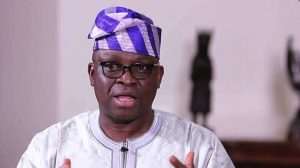 By Oluwatosin Babatunde
In Nigeria’s already overheated political climate, words are not just statements—they are triggers. When a figure like Ayodele Fayose speaks, the public listens, the media amplifies, and tensions can rise in an instant. That is why his recent allegation that Seyi Makinde is plotting to dethrone the Olubadan of Ibadanland, Rashidi Ladoja, is not just irresponsible—it is dangerous.
Fayose’s claim, made without verifiable evidence, reflects a troubling pattern of political sensationalism. In a democracy, opposition voices are essential, but credibility is their currency. When allegations are made casually and without proof, they erode public trust—not just in the target, but in the accuser as well. This is not opposition; it is noise masquerading as relevance.
Traditional institutions, especially revered stools like that of the Olubadan, are deeply sensitive and symbolic. Dragging them into political speculation without basis risks igniting unnecessary tension within communities that value stability and respect for hierarchy. Fayose, as a former governor, should understand the weight of such implications. Leadership does not end with office; it continues in conduct.
This episode raises a larger concern about the quality of political discourse in Nigeria. If public figures weaponize rumours for attention or political positioning, governance becomes secondary to theatrics. Nigerians deserve better than a cycle of unverified claims and reactionary denials.
However, beyond criticizing Fayose, this moment also presents an opportunity for Governor Makinde.
Makinde must resist the temptation to engage in prolonged back-and-forth political exchanges. His strongest response is not outrage but consistency—consistency in governance, transparency, and respect for traditional institutions. By maintaining a calm, fact-based approach, he reinforces public confidence and separates leadership from noise.
More importantly, Makinde should deepen engagement with traditional rulers across Oyo State. Open communication, visible respect, and institutional collaboration will not only dispel rumours but also strengthen the cultural and political fabric of the state. In times like this, perception matters as much as reality.
Additionally, the governor would do well to encourage a more disciplined information environment within his administration. Swift, clear, and factual communication helps neutralize misinformation before it gains traction.
In the end, this controversy is less about a dethronement plot and more about the standards we demand from our political actors. Fayose’s comments fall short of those standards. Makinde, on the other hand, has an opportunity to rise above the fray and demonstrate what measured, responsible leadership looks like.
Nigeria’s democracy does not just need loud voices—it needs credible ones.