

Soldiers buy uniforms, protective gear with personal funds — dismissed officer alleges
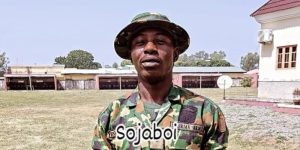 A dismissed Nigerian soldier, Rotimi Olamilekan, has alleged that personnel of the Nigerian Army purchase their own uniforms and protective gear despite earning modest salaries.
Olamilekan, a former lance corporal popularly known as “Soja Boi,” made the claims in a yet-to-be-released interview on the Honest Brunch Podcast alongside activist Omoyele Sowore.
Speaking in the interview, he disclosed that his salary before dismissal in March stood at about ₦109,000 to ₦111,000, following a recent increment from ₦51,000.
“As a soldier… the last salary wey I collect for army ₦109,000 or ₦111,000. But before that… ₦51,000,” he said, adding that survival on the previous pay was difficult.
“And how were you surviving on ₦71,000? The suffer no be small… nothing dey enter for you as a soldier,” he added.
The ex-soldier further alleged that uniforms and boots are not provided, forcing personnel to bear the cost.
“No, they don’t give uniform… Ask any soldier, na you go buy uniform, na you go buy boots, na you go buy anything you wan use,” he said, estimating that a uniform costs about ₦55,000, while boots could go for as much as ₦60,000.
He also claimed that essential protective equipment, including bulletproof vests and helmets, are rarely issued to soldiers except during special visits by senior officials.
“I swear, nobody will give you… If anything happen, na you e go first meet without bulletproof,” he said.
Olamilekan recounted spending over four years in Maiduguri, exceeding the standard two-year rotation, and described operating in high-risk areas without adequate protection.
The former soldier had earlier gone viral after criticising the treatment of military personnel and urging political leaders to send their children to the frontlines.
“I was arrested and dismissed… because of a video I made… where I called on politicians’ children to join the military,” he claimed.
Confirming his release after weeks in detention, he thanked supporters, saying, “Your voices were heard… you showed that unity and collective voice still matter.”
When contacted, the Nigerian Army spokesperson, Lieutenant Colonel Appolonia Anaele, said an official response would be issued.
“I’ll get back to you with a formal statement. You have to wait,” she said.