

Presidency explains Tinubu’s airport meeting with Plateau attack victims
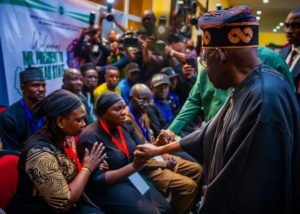 The Presidency has defended President Bola Tinubu’s decision to meet victims of the Plateau killings at the Yakubu Gowon Airport in Jos, citing logistical and security constraints.
In a statement on Friday, the Special Adviser to the President on Information and Strategy, Bayo Onanuga, said the airport’s runway does not support night flights due to the absence of navigational aids, making it impractical for the President to travel into Jos township and return before dusk.
He explained that the distance between the airport and the affected communities would have made it difficult to conduct an on-the-spot visit and still meet flight safety requirements.
“Consequently, state and federal officials decided to bring representatives of the affected community to a hall adjoining the airport so the President could meet with them promptly while adhering to flight restrictions,” the statement said.
The visit followed the recent attack in Angwan Rukuba, Jos North Local Government Area, where gunmen killed at least 28 people during Palm Sunday violence.
The Presidency also attributed delays in Tinubu’s departure from Abuja to a bilateral meeting with Chadian President Mahamat Idriss Déby Itno, which overran its scheduled time.
Despite the criticism trailing the airport meeting, the Presidency maintained that the visit achieved its purpose, noting that the President engaged with victims, community leaders and security chiefs on measures to end the recurring violence.
During the visit, Tinubu sympathised with victims, including a grieving mother whose son was killed in the attack, and announced measures such as the deployment of over 5,000 surveillance cameras, directives to security agencies to apprehend perpetrators, and plans for compensation for affected families.
However, former Vice President Atiku Abubakar criticised the approach, describing the visit as insensitive and inadequate, arguing that the President failed to reach the affected communities or directly engage victims at the scene.