

Trump: I may never forgive my political enemies
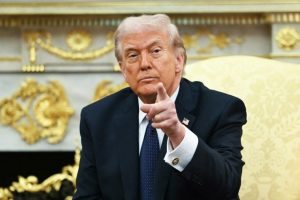 US President Donald Trump has said he may never forgive some of his political opponents, insisting that he would rather be honest about his feelings than pretend to have forgiven them.
Trump made the remarks during an interview with CBS News correspondent, Ross Douthat, on the television programme 60 Minutes, aired on Sunday, November 8.
The discussion centred on Trump’s religious beliefs, his views about life after death and whether his unwillingness to forgive political opponents could affect his chances of gaining entry into heaven.
During the interview, Douthat recalled Trump’s controversial remarks at the memorial service of conservative activist, Charlie Kirk, where the president openly admitted that he hated his political opponents and did not wish them well.
His comments had contrasted sharply with the message of forgiveness delivered at the event by Kirk’s widow, Erika Kirk.
Asked whether he could forgive former FBI Director, James Comey, former House Speaker, Nancy Pelosi and other political opponents, Trump questioned why he should pretend to forgive people he considered dishonest and harmful to the United States.
He maintained that his commitment to America was stronger than his affection for individuals he believed had worked against the country’s interests.
When Douthat pressed him on whether he would refuse to forgive his opponents, even if doing so had implications for his relationship with God, Trump was unequivocal.
“The answer is no. I want to be honest, no,” he said.
The US president subsequently accused his political opponents of treating him unfairly, alleging that government institutions had been weaponised against him.
He cited his impeachments and criminal indictments as examples of what he described as political persecution.
Trump further admitted that he harboured hatred towards some of his political adversaries, adding that his feelings might never change.
“I probably cannot do that, no, because I do hate some of my enemies and I always will,” he said.
However, Douthat challenged the president’s position, questioning why someone who had enjoyed the privileges and opportunities of occupying the highest political office in the United States would find it difficult to forgive those he considered his enemies.
Trump responded that he could have given a more acceptable answer but preferred to speak honestly about his feelings.
The interview also addressed several issues confronting his administration, including the Republican Party’s performance in the midterm elections, the conflicts in Iran and Ukraine, the economy, immigration and his political legacy.
The president’s remarks have once again brought his personal approach to political disagreements and the place of forgiveness in public leadership into focus.