

COP31 Opens With Clash Over Climate Finance As UN Chief Urges Leaders To Act
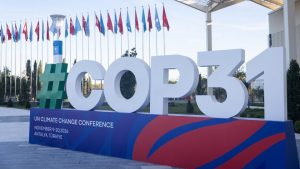
The 31st United Nations Climate Change Conference (COP31) opened in Turkey on Monday amid disagreements over climate finance, with UN Secretary-General António Guterres urging world leaders to intensify efforts to tackle the climate crisis.
Thousands of delegates gathered at an expo centre in the Mediterranean city of Antalya for the two-week summit, which comes after a year marked by devastating weather events, including heatwaves in Europe, major wildfires in Indonesia and catastrophic floods in Nepal.
“We have entered a new age of climate extremes,” Guterres said in a statement.
He called on world leaders to “get serious by cutting emissions faster, accelerating a just transition from fossil fuels and delivering the finance and protection vulnerable countries need”.
However, the conference got off to a difficult start, with its opening ceremony delayed by an hour and a half as negotiators held late discussions over demands by developing countries for climate finance issues to be included on the official agenda.
Jasper Inventor, head of Greenpeace’s COP31 delegation, described the development as a difficult beginning for the summit.
“This has already been a difficult start for COP31,” he said.
The disagreement centred on demands by developing nations for discussions on how wealthy countries should provide financial support to poorer nations facing the effects of climate change.
Under existing UN climate agreements, developed countries, which bear historical responsibility for most greenhouse gas emissions, are expected to support developing nations in adapting to climate impacts and transitioning to cleaner energy. However, poorer countries argue that the funding provided so far is inadequate.
Inventor said developed countries had taken a “hard line” on including a platform agreed at COP30 in Brazil last year to discuss how wealthy nations should provide the required funding.
A source familiar with the negotiations said the climate finance work programme would be included in the agenda.
African countries had also pushed for discussions on tripling adaptation finance to help vulnerable nations fund measures such as sea walls and drought-resistant crops. However, the source said the issue would be addressed under other agenda items rather than as a separate point.
The financial disagreement comes amid concerns that COP31 may produce few major breakthroughs, as countries contend with an oil price shock and geopolitical tensions arising from the US war with Iran and Russia’s conflict in Ukraine.
A senior European Union official had warned last week that there would be “no political will” for additional funding commitments at the summit.
The long-term climate outlook also remains troubling. In September, the United Nations warned that global temperatures were on course to exceed 1.5 degrees Celsius above pre-industrial levels, the most ambitious threshold established under the Paris Agreement.
Turkey is presiding over COP31, while Australia is leading the negotiations under an unusual arrangement reached to resolve a dispute over hosting the conference.
COP31 President Murat Kurum, who is also Turkey’s environment minister, and Australian Climate Minister Chris Bowen celebrated the partnership during the opening ceremony, raising their clasped hands to applause.
The two countries have described the summit as the “implementation COP”, with an emphasis on translating years of climate commitments into practical action.
“We know that delay carries one of the heaviest costs in climate action,” Kurum said.
Turkey is also seeking support for a voluntary electrification pledge aimed at increasing the share of global energy demand supplied by electricity from about 20 per cent currently to 35 per cent by 2035.
However, the proposal could trigger disagreements over the role of fossil fuels. The European Union has advocated “clean” electrification, a position that could raise questions about whether the Turkish initiative adequately addresses the use of oil, gas and coal.
At COP28 in Dubai in 2023, countries agreed to transition away from fossil fuels, but efforts to establish a clear pathway for implementing the commitment have faced resistance.
COP30 ended without an explicit reference to fossil fuels in its final agreement after opposition from oil-producing countries. Brazil subsequently introduced a voluntary roadmap outlining proposals for phasing out fossil fuels, which countries could adapt to their national circumstances.
Brazilian President Luiz Inácio Lula da Silva, who was expected to address COP31 later in the week, was due to arrive in Antalya on Monday following his re-election victory, which climate activists welcomed as a positive development for climate action.
Meanwhile, the absence of the United States government delegation has drawn attention, as President Donald Trump has repeatedly expressed climate-sceptic positions.
A US congressional delegation, however, is expected to attend the summit, with Democrats arriving after their historic victory in last week’s midterm elections.