

Public Servants Begin Three-Day Warning Strike Over Fuel Price, Wage Demands
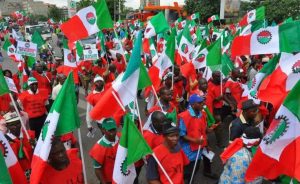 Public sector unions under the Joint National Public Service Negotiating Council, JNPSNC, have directed federal, state and local government workers nationwide to commence a three-day warning strike over the government’s failure to address their demands.
The strike is scheduled to begin at midnight on Friday, October 2, and end on Sunday, October 4, 2026.
In a circular dated October 1 and signed by the council’s National Secretary on the Trade Union side, Olowoyo Gbenga, affiliate unions were directed to ensure full compliance with the industrial action.
The council said the decision followed the failure of the Federal Government to respond to demands contained in its September 21 letter to President Bola Tinubu.
Among the demands are a reduction of the pump price of petrol to N500 per litre, an immediate wage award for workers and the commencement of negotiations for a new national minimum wage expected to take effect in 2027.
The JNPSNC said the demands were necessary to address what it described as worsening economic hardship affecting workers, their dependants and vulnerable Nigerians.
The council had earlier given the Federal Government a September 30 deadline to address the issues, warning that failure to do so would trigger the warning strike.
The unions expressed disappointment that President Tinubu’s Independence Day address did not announce a reduction in petrol prices or immediate measures to cushion the economic hardship.
A JNPSNC leader said the council was “deeply disappointed” that the President’s address failed to address what it described as the legitimate demands of Nigerian workers.
The council also called for the establishment of a tripartite committee to begin negotiations for a new national minimum wage ahead of 2027.
The warning strike involves several public sector unions, including the Nigerian Civil Service Union, Medical and Health Workers Union, Association of Senior Civil Servants of Nigeria and National Association of Nigerian Nurses and Midwives.
Other participating unions include the Amalgamated Union of Public Corporations, Civil Service Technical and Recreational Employees; Nigeria Union of Public Service, Reportorial, Secretarial, Data Processors and Allied Workers; National Union of Printing, Publishing and Paper Products Workers; and National Union of Agriculture and Allied Employees.
The Nigeria Labour Congress, NLC, has also expressed support for the concerns raised by the JNPSNC.
In its Independence Day statement, NLC President Joe Ajaero cited rising petrol prices, inflation, stagnant wages, unemployment and insecurity as factors contributing to the economic difficulties facing workers and other Nigerians.
The NLC called for an immediate reduction in petrol prices, a nationwide wage award, implementation of previously agreed tax relief measures and the commencement of negotiations for a new national minimum wage.
It also called for a reduction in the cost of governance, greater transparency in the management of public resources and increased economic opportunities for young Nigerians.
The labour centre further raised concerns over insecurity and its impact on farmers, teachers, healthcare workers and other Nigerians.
The NLC said workers should retain the right to make independent political choices ahead of the 2027 general elections, based on the policies and records of political parties and candidates.