

Atiku Reaffirms Plan to Restore Petrol Subsidy, Disowns Aide’s Position
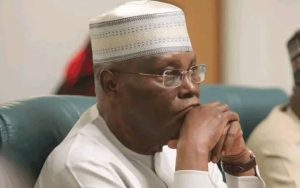 Presidential candidate of the African Democratic Congress, Atiku Abubakar, has reaffirmed his plan to restore petrol subsidy if elected president in 2027, insisting that his position on the policy has not changed.
Atiku spoke on Tuesday when he received the Osun State leadership of the ADC in Abuja, where he also disowned comments by one of his media aides, Paul Ibe, saying Ibe was not speaking on his authority.
“Earlier, one of my press aides contradicted me in a policy statement as far as subsidy is concerned.
“I want to repeat categorically that when I said I would return to subsidy, I will! Nigeria is rich enough to look after the welfare of its citizens. Let it be clearly stated that he was not speaking on my own authority,” Atiku said.
Ibe had earlier said during an interview on AIT that Atiku would restore petrol subsidy if elected but gradually phase out the intervention as the economy recovers.
However, Atiku said his position was for the restoration of a targeted subsidy aimed at easing hardship and restoring purchasing power.
“On the question of subsidy, my position has not changed and will not change: I will restore it! A nation as blessed as ours has no business abandoning its citizens to hardship,” Atiku said in a statement posted on X.
He said his proposed policy would focus on making wages more valuable, reducing transportation and food costs, supporting farmers and enabling businesses to produce and create jobs.
“That is why I will restore targeted subsidy and put purchasing power back in the hands of Nigerians,” he said.
Atiku also distinguished his proposal from the former fuel import subsidy regime, saying his administration would support domestic production rather than subsidise imported petrol.
In a statement issued by his Senior Special Assistant on Public Communication, Phrank Shaibu, the Atiku campaign said the proposed intervention would be targeted, capped, transparently budgeted and independently audited.
According to Shaibu, the policy would support local refining, increase fuel supply and reduce energy costs.
He said the intervention would not have an arbitrary withdrawal date but would be phased out as domestic refining capacity expands, fuel supply stabilises and competition improves.
“You do not remove scaffolding because the calendar says so. You remove it when the building can stand securely on its own,” Shaibu said.
He added that the policy would be designed to prevent the leakages associated with Nigeria’s former subsidy regime.
The clarification comes amid renewed debate over petrol subsidy ahead of the 2027 presidential election.
President Bola Tinubu removed the petrol subsidy on May 29, 2023, shortly after assuming office. The policy contributed to a sharp increase in petrol prices and has remained a major source of debate over the administration’s economic reforms.
The Federal Government has defended the subsidy removal, alongside foreign exchange reforms, as necessary to strengthen public finances and attract investment.
However, Atiku has argued that Nigerians have not benefited sufficiently from the savings generated by the policy and that government intervention is necessary to reduce the cost of living.
Meanwhile, Ibe said Atiku’s proposed intervention would be tied to crude oil production and domestic refining.
He explained that crude would be supplied to local refiners at a discounted price, allowing them to produce petrol and diesel at lower costs and ultimately reduce pump prices.
Ibe said an independent committee would determine the appropriate crude price, while government would monitor the downstream market to ensure that refiners and marketers operated within the framework of the policy.
He described the intervention as temporary and aimed at stimulating economic activity and increasing productivity.
Ibe also criticised the Tinubu administration for implementing several major reforms, including petrol subsidy removal and foreign exchange liberalisation, without sufficient measures to cushion their impact on Nigerians.
He argued that the simultaneous reforms had worsened the cost-of-living crisis confronting households and businesses.