

Tinubu backs Port Harcourt, Warri refineries despite Obasanjo’s doubts
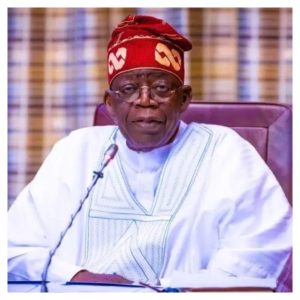
President Bola Tinubu has expressed confidence that Nigeria’s state-owned Port Harcourt and Warri refineries will return to sustained operations, rejecting doubts over the viability of the facilities.
Tinubu made the declaration on Thursday when he received the Executive President of the Nigeria Union of Petroleum and Natural Gas Workers, Salimon Oladiti, and other union members at the Presidential Villa, Abuja.
The President said the government was working on a sustainable economic and structural framework for the refineries rather than simply restarting them.
“The refineries you mentioned are going to come back to work. We’re just building a very firm research and structural reworking of the economy of it. Ordinary flame and smoke of a refinery doesn’t mean it’s working, until it’s profitable and yields the value for which it is built,” Tinubu said.
He also accepted responsibility for fixing the refineries, regardless of the challenges inherited from previous administrations.
“I am not a man who looks back because I have accepted the asset and liability of my predecessor, no matter what has happened in the years past. It is my responsibility now to fix it and make it work for the largest common value of our population. I take responsibility for that, and I’m going to do it,” he said.
Tinubu’s position contrasts with that of former President Olusegun Obasanjo, who has repeatedly questioned the ability of the Nigerian National Petroleum Company Limited to successfully operate the government-owned refineries.
Obasanjo, in a recent television interview, advocated public-private partnerships for major government assets, citing the success of the Nigeria LNG Limited, where private investors hold a majority stake.
He recalled that his administration, between 1999 and 2007, attempted to transfer the management and ownership of the refineries to private investors.
According to him, Shell declined an offer to take a 10 per cent equity stake and operate the refineries. The company also rejected a subsequent proposal to manage the facilities without taking an equity stake.
Obasanjo said Shell cited the small size of the refineries, poor maintenance and corruption as some of the reasons for its reluctance to operate them.
He also recalled that Aliko Dangote offered $750 million for a 51 per cent stake in two of the refineries during his administration, but the transaction was later reversed by the late former President Umaru Musa Yar’Adua following pressure from the NNPC.
Obasanjo said the government had subsequently spent billions of dollars attempting to rehabilitate the facilities without achieving sustained operations.
Dangote, who is now the owner of the Dangote Petroleum Refinery, has also previously expressed doubts about the viability of the NNPC-managed refineries.
He argued that repeatedly modernising ageing facilities could create technical and financial challenges, likening the approach to upgrading an old car with a new engine while retaining its decades-old body.
However, the Tinubu administration appears determined to pursue the rehabilitation and restart of the facilities.
The NNPC Group Chief Executive Officer, Bayo Ojulari, recently announced a memorandum of understanding with two Chinese companies for the rehabilitation of the Port Harcourt and Warri refineries.
Energy expert Dan Kunle, however, criticised the continued government investment in the facilities, arguing that the refineries should instead be privatised.
Kunle said previous administrations had followed the same path without restoring the refineries to profitable operations.
“Because we have passed through that road before, those refineries will never work. If they ever work, they will not work at profit. They will remain problematic,” he said.
He urged the government to compare the performance of the old facilities with a newly built refinery to demonstrate whether the existing plants could operate competitively.
Kunle also questioned the continued allocation of public funds to the refineries, arguing that government resources could be redirected towards sectors such as education, agriculture, gas infrastructure and other areas of the economy.
He further called for greater accountability over funds previously spent on the rehabilitation of the refineries.
Meanwhile, the Port Harcourt Refinery Host Community Bulk Petroleum Retailers Association has pledged to support Tinubu if the Port Harcourt refinery resumes full and sustainable operations before the 2027 general election.
The association, also known as HOSCOM, said the revival of the refinery would create jobs, stimulate businesses, strengthen local capacity and improve energy security in Rivers State.
It estimated that more than 200,000 people depend directly and indirectly on the refinery and related economic activities.
HOSCOM also backed the proposed technical equity partnership between the NNPC and Chinese firms for the restart and expansion of the refinery.
The association urged stakeholders to ensure reliable crude supply, efficient management, proper maintenance and technical competence.
It said it would mobilise its members and supporters to back Tinubu if the Port Harcourt refinery becomes fully operational before the next general election.
“The association further pledges to work towards doubling the votes President Tinubu received in Rivers State in the last election, should the Port Harcourt Refinery become operational before the election,” HOSCOM said.