

Sowore unveils education blueprint, promises free WAEC, NECO fees under proposed 2027 government
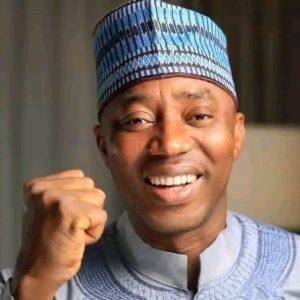 Human rights activist and African Action Congress presidential candidate, Omoyele Sowore, has unveiled his education policy blueprint ahead of the 2027 general election, promising free education at all levels and the abolition of fees for public examinations.
Sowore, in a post on his verified X handle on Monday, said students would no longer be required to pay for the West African Senior School Certificate Examination (WAEC), National Examinations Council (NECO) examinations or any other public examination if he becomes president.
The proposal comes shortly after public criticism of the Federal Government’s planned increase of WAEC and NECO registration fees from N27,500 to N50,000, which has since been suspended for further consultation.
Presenting his policy document, Sowore said education should be treated as a right rather than a privilege.
“No government under a #Sowore2027 administration will ever ask your child to pay WAEC, NECO, or any other public examination fee. Education will be free because knowledge is a right, not a privilege,” he said.
The AAC candidate said his proposed education reforms would provide free and quality education from early childhood to university level, supported by improved infrastructure, technology-driven learning, better welfare for teachers and financial support for students.
The 20-point education manifesto outlines plans covering access, funding, curriculum reform, digital education, research, student welfare and institutional autonomy.
Sowore proposed a restructuring of the education system into five years of primary education, five years of secondary education and four years of university education, while also establishing community colleges across all local government areas to provide two-year associate degree programmes.
The policy document also promises semester grants for students in public tertiary institutions to support academic and living expenses.
On technology, Sowore proposed digital classrooms, virtual laboratories, online libraries, artificial intelligence-assisted learning, coding from primary school, robotics, data science and cybersecurity training.
He also pledged reforms in technical and vocational education, with programmes focused on renewable energy, manufacturing, agriculture, aviation, maritime, software engineering and other emerging industries.
The manifesto further proposes converting polytechnics and monotechnics into universities, while granting universities greater autonomy in academic, financial and administrative affairs.
Sowore said teachers would be prioritised through improved salaries, housing support, research opportunities and professional development programmes.
The policy also includes plans for increased investment in research and innovation, including grants for projects in medicine, artificial intelligence, renewable energy, biotechnology, manufacturing and public health.
On student welfare, the proposed reforms include school feeding programmes, healthcare services, counselling, menstrual hygiene support, mental health services and inclusive education for students with disabilities.
Sowore said his education plan was designed to create a system where no Nigerian child’s future would be determined by poverty.
“This is not a promise of politics. It is a revolutionary commitment to build a nation where no child’s future is determined by poverty,” he said.