

Benue Assembly recommends N75,000 minimum salary for traditional rulers
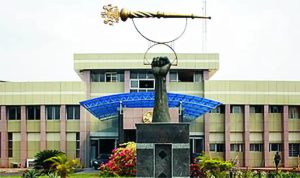 The Benue State House of Assembly has urged Governor Hyacinth Alia to approve an upward review of the salaries and allowances of traditional rulers across the state.
The lawmakers recommended that no traditional ruler should earn below the national minimum wage of N75,000, while advocating a remuneration structure that reflects the category and status of each traditional institution.
The Assembly also called for the provision of official vehicles for traditional rulers, beginning with kindred heads, to strengthen grassroots leadership and administration.
The resolutions were reached during plenary presided over by the Speaker, Berger Alfred, following deliberations on revenue generation and administration in the state.
The lawmakers further directed the Local Government Service Commission to organise capacity-building and digital training programmes for local government revenue officers to improve transparency, efficiency and accountability in revenue collection.
As part of efforts to strengthen oversight of the state’s revenue system, the Assembly summoned the Executive Chairman of the Benue Internal Revenue Service, BIRS, Joseph Kwaghgba, to appear before the House on Tuesday, July 14, 2026.
Kwaghgba is expected to present a comprehensive report on the state’s internally generated revenue, including current revenue performance, collection mechanisms, technologies deployed for tax administration, measures to curb double taxation and strategies to block revenue leakages.
He is also expected to brief lawmakers on the implementation of the new presumptive tax regime and outline plans to expand the state’s tax base without imposing undue burdens on residents and businesses.
The decision followed a motion of urgent public importance sponsored by the member representing Tiev State Constituency, Matthew Damkor.
Leading the debate, Damkor described internally generated revenue as crucial to sustainable development, noting that improved revenue generation would reduce dependence on allocations from the Federation Account Allocation Committee, FAAC, while providing resources for infrastructure and public services.
He said the Assembly needed accurate data on the state’s revenue profile, baseline and projections to effectively carry out its constitutional oversight and appropriation responsibilities.