

CBN targets N2.83tn cash outside banks, plans to onboard 50 million Nigerians by 2028
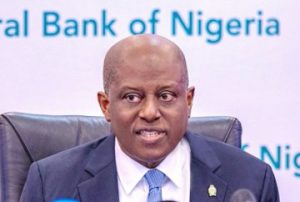 The Central Bank of Nigeria (CBN) has unveiled plans to bring about N2.83 trillion currently held outside the banking system into formal financial channels and expand financial inclusion by onboarding 50 million additional Nigerians by 2028.
The targets are contained in the Nigeria Payments System Vision 2028 (PSV 2028), launched by CBN Governor Olayemi Cardoso in Abuja on Monday.
Cardoso said the initiative aims to deepen digital payments, reduce dependence on cash transactions, strengthen confidence in financial services and position Nigeria as a leading payments hub in Africa.
According to him, efficient payment systems remain one of the fastest ways to reduce poverty and stimulate economic growth.
“One of the fastest ways to take a large number of people out of poverty is through an efficient payments system,” Cardoso said.
The apex bank noted that cash remains heavily concentrated outside the formal financial system despite years of financial inclusion efforts.
CBN data show that currency outside banks stood at N5.08 trillion in April 2026, representing about 90 per cent of the N5.65 trillion in circulation during the period.
Cardoso said the bank intends to reduce cash held outside banks to less than 40 per cent of money in circulation by 2028.
“I would like to see a situation where we will reduce cash outside the banking system to less than 40 per cent of money in circulation,” he said.
Based on current figures, achieving the target would return about N2.83 trillion to the banking system.
The CBN governor linked the objective to efforts to build trust in digital payment channels and reduce reliance on cash.
“Cash should no longer be king,” he stated.
Cardoso also disclosed that the CBN plans to raise financial inclusion to 95 per cent by 2028, bringing an estimated 50 million more Nigerians into the formal financial ecosystem.
“Under Vision 2028, I would like to see this reaching 95 per cent inclusion. That means 50 million more market women, farmers and young people will have a bank account or wallet in their name,” he said.
He described financial inclusion as a key driver of economic transformation, poverty reduction and national productivity.
“The journey is to impact the lives of the poor. The journey is to lift people out of poverty and to have an impact on GDP,” Cardoso added.
CBN Deputy Governor, Economic Policy Directorate, Dr Muhammad Abdullahi, said the Payments System Vision 2028 is built around five strategic pillars – payment infrastructure and interoperability, digital financial inclusion, innovation and emerging technologies, cross-border payments.
According to Abdullahi, the framework seeks to modernise payment infrastructure, expand real-time payments, improve consumer protection, leverage emerging technologies such as artificial intelligence and blockchain, and strengthen Nigeria’s participation in regional payment systems.
“Efficient payment infrastructure lowers transaction costs, improves business productivity and enables firms of all sizes to participate competitively in the digital economy,” he said.
The Director-General of the Securities and Exchange Commission (SEC), Dr Emomotimi Agama, said collaboration among regulators would be crucial to the success of the initiative.
Similarly, the Executive Vice Chairman of the Nigerian Communications Commission (NCC), Dr Aminu Maida, described the vision as a major step towards achieving the Federal Government’s goal of building a $1 trillion economy.
Maida said the NCC would continue expanding broadband and fibre infrastructure to support digital payments and financial inclusion across the country.
Cardoso, however, stressed that the success of the vision would depend on implementation rather than policy declarations.
“The success of PSV 2028 will not be measured by the quality of this document. It will be measured by execution,” he said.