

Voter Register Chaos: INEC Flags Dead Names Amid 2.6 Million Registrations
The Independent National Electoral Commission (INEC) has recorded 2,685,725 completed registrations in the first phase of the Continuous Voter Registration (CVR) exercise, which ended on December 10.
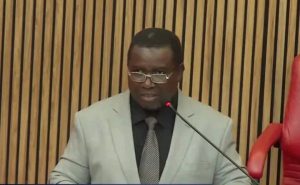
INEC Chairman, Prof. Joash Amupitan, disclosed this Thursday at the Nigeria Civil Society Situation Room National Stakeholders Forum on Elections in Abuja. Of the total, 1,576,137 registrations were completed online, while 1,109,588 were finalised through physical capture.
Highlighting voter turnout, Prof. Amupitan said Osun State led with 208,357 registered voters, followed by Kaduna (159,669), Plateau (152,650), Imo (145,561), Borno (123,835), and Lagos (123,484).
“Phase One concluded successfully on December 10,” he said. “The next stage, the claims and objections period, begins on December 15. This window allows citizens to verify and correct entries before the register is finalised.”
The INEC chairman raised serious concerns over the integrity of the voter register, noting it has not been comprehensively cleaned since 2011, leaving the names of deceased individuals on the list. “During our review in Anambra, we found that a prominent leader who passed away over a decade ago was still listed. Such discrepancies raise questions about the credibility of the register,” he said.
Phase Two of the CVR is scheduled to start on January 5, 2026, with registration centres relocated closer to wards and communities to address access challenges encountered in Phase One.
On electoral malpractice, Prof. Amupitan said INEC has reached out to security agencies, including the police and EFCC, for updates on arrests related to vote buying and financial inducements during recent elections. “The commission can prosecute offenders, but we do not have powers to arrest,” he explained.
He also addressed operational challenges with the Bimodal Voter Accreditation System (BVAS) and the INEC Result Viewing Portal (IReV), noting that poor network coverage in several polling units has hindered real-time data uploads. “Some devices uploaded results immediately, while others failed due to weak signals,” he said.
Prof. Amupitan added that the commission is in discussions with the Nigerian Communications Commission and mobile network operators to explore alternative technologies and system redundancies. “However, we do not control telecom infrastructure. If a powerful politician were to influence network access on election day, we would have no recourse. These are structural issues we must all confront,” he said.
The chairman stressed that the CVR is a statutory exercise designed to enable eligible Nigerians—including those turning 18 and those relocating—to register to vote, ensuring that the electoral process is credible and inclusive.