

North Risks Backward Slide Without Unity, Atiku Warns Leaders
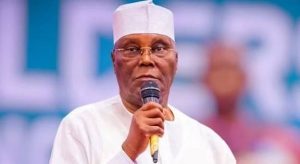
Former Vice President Atiku Abubakar has urged northern leaders to urgently rebuild unity and refocus on education, agriculture and industrial expansion, warning that the region is at risk of falling further behind in an increasingly competitive global environment.
Speaking in Kaduna at the 25th anniversary dinner and awards ceremony of the Arewa Consultative Forum (ACF), Atiku said the Forum was originally established to forge cohesion in the North and drive a development agenda anchored on the vision of the late Premier, Sir Ahmadu Bello.
Atiku recalled that when the PDP government came into office in 1999, the region was deeply fragmented, with political blocs split around the late President Shehu Shagari, the late Dr. Sola Saraki and the late Abdurrahman Okene.
“The first step we took was to unite the North,” he said. “I set up a committee led by the Emir of Ilorin, HRH Ibrahim Sulu-Gambari, to reconcile these factions. It was difficult, but we were eventually able to build a single platform under General Yakubu Gowon and the late M.D. Yusufu.”
He said the ACF’s founding mission was not only unity but also purposeful development along the lines laid out by Ahmadu Bello, who emphasised education, agriculture and industry as the foundation of the region’s progress.
Quoting Bello’s 1961 address, Atiku noted the core priority of deploying trained manpower and modern methods to boost productivity and open up arid regions through water and farming infrastructure. Bello, he added, also stressed peace and stability as prerequisites for educational growth, agricultural expansion, industrialisation and investment.
The former vice president lamented that the North appears stuck where it was two decades ago, despite past efforts to revive education and expand economic capacity through the National Development Programme initiated under his watch.
“We found our education in disarray. We doubled enrolment and improved transition rates, yet the old problems have resurfaced,” he said. On industrialisation, he added: “Energy shortages, poor financing, raw material gaps and multiple taxation were major barriers. Shockingly, two decades later, we seem to be facing the same challenges.”
He warned that disunity remains the greatest threat to northern progress, pointing to countries with far more ethnic complexity—such as China and India—that have managed diversity and achieved substantial development gains.
“Why can’t we do better?” he queried, accusing unnamed interests of using technology to sow division in pursuit of the region’s natural wealth. “We have seen what happened in the Democratic Republic of Congo. We must not allow similar exploitation.”
Atiku urged northern leaders to confront the future with urgency, especially as Nigeria’s population continues to rise. “How do we feed, educate and provide jobs for hundreds of millions?” he asked. “The 21st century will not reward complacency or leadership without vision.”
He appealed for unity across the region, warning against those exploiting ethnic or religious sentiments. “If there is a time for the North to unite, it is now,” he said. “We must ask ourselves how we want to be remembered — as leaders who made sacrifices or those who merely buttered their bread.”