

ASUU Cautions FG Over Slow Pace of Talks, Warns of Fresh Disruptions
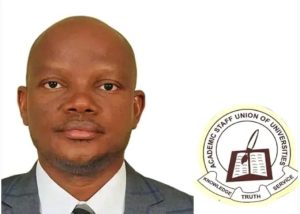
The Academic Staff Union of Universities (ASUU) has expressed growing concern over what it described as the Federal Government’s inconsistent approach to the ongoing renegotiation of its agreement with the union, warning that such laxity could have “grave consequences” for Nigeria’s higher education system.
The union’s National Executive Council (NEC), which met from November 8 to 9, 2025, at Taraba State University, Jalingo, reviewed the progress of discussions with government representatives and decried what it termed a lack of seriousness and commitment in the renegotiation process.
In a communiqué signed by ASUU President, Prof. Chris Piwuna, the union recalled that it had, at an emergency meeting on October 21, 2025, suspended its warning strike in a show of good faith—despite describing the government’s offer at the time as “grossly insufficient.”
According to the statement, the suspension of the industrial action was a gesture of respect for the goodwill shown by students, parents, the Nigeria Labour Congress (NLC), the media, and other concerned Nigerians who intervened in the dispute.
However, ASUU lamented that little progress had been made since the truce.
“It is now the responsibility of the government to take advantage of this opportunity to quickly resolve all outstanding issues in order to keep our children in school,” the union said.
The NEC accused the government of treating education as a commercial venture rather than a social investment crucial to national development.
Rejecting the proposed salary adjustment offered by government negotiators, ASUU described it as “a mere drop in the ocean,” arguing that it was incapable of addressing the worsening brain drain in the university system.
While acknowledging some movement on non-monetary issues, the union insisted that the financial aspects—particularly salaries and conditions of service—remain the core of the negotiation and must be addressed with sincerity and urgency.
ASUU also took exception to what it called “misrepresentation” by certain government officials about the outcomes of previous agreements, warning that such actions could further erode trust between both parties.
The union cautioned that token gestures, including the partial payment of promotion arrears from 2017 and the release of third-party deductions, should not be paraded as major achievements.
“Government’s goal should not be to control the narrative but to solve the problem,” the statement added, urging officials to adopt a communication strategy that builds confidence rather than suspicion.
ASUU further called on the government to utilize the remaining days of the one-month negotiation window to achieve a comprehensive and lasting resolution that would improve the welfare of Nigerian academics.
Citing data from the Federation Accounts Allocation Committee (FAAC), the union pointed out that government revenues had grown significantly—from ₦3.42 trillion in 2022 to ₦4.65 trillion in 2024 at the federal level, and from ₦3.92 trillion to ₦5.81 trillion among states—arguing that the issue was not a lack of funds but a lack of political will to prioritize education.
“Contrary to claims of paucity of funds, the figures show clearly that the problem is not economic but political,” the statement declared.
ASUU appealed to traditional rulers, labour unions, student groups, civil society organizations, and other stakeholders to continue pressuring the government to act responsibly and ensure that university lecturers are paid a living wage.
> “The surest way to protect the future of this nation is to invest in education,” the statement concluded.