

South Africa relocates migrants amid rising anti-immigrant tensions
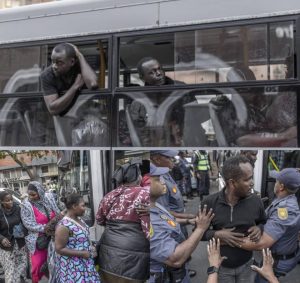
South African authorities on Thursday evacuated hundreds of foreign nationals who had taken refuge at a church centre in Durban following growing anti-migrant tensions in parts of the country.
Police moved about 400 migrants from countries including the Democratic Republic of Congo, Ethiopia, Rwanda and Somalia from the church complex in the coastal city to a government refugee facility.
The evacuation followed days of tension after some foreign nationals sought safety over fears of attacks linked to anti-immigrant campaigns.
Local anti-migrant groups gathered during the operation, chanting slogans as buses carrying the migrants departed the area.
Some migrants held identity documents against bus windows, insisting they were legally resident in South Africa.
Several affected persons said they fled their homes after groups opposed to undocumented migration reportedly issued warnings ordering foreigners without legal status to leave by June 30.
Authorities said the ultimatum carried no legal backing.
Minor clashes were reported during the evacuation, with police intervening after tensions briefly escalated.
A leader of one anti-immigration group, March and March, Jacinta Ngobese-Zuma, said her organisation opposed violence but maintained that undocumented migrants should leave South Africa.
The group blamed migrants for challenges including unemployment and crime, claims analysts have repeatedly described as scapegoating.
Meanwhile, Ghana announced plans to evacuate more than 800 of its citizens from South Africa following outrage over a viral video allegedly showing the assault of a Ghanaian national.
South Africa has experienced repeated waves of xenophobic violence over the years.
Major attacks in 2008 left dozens dead and displaced thousands, while similar incidents occurred in 2015 and 2021, often fuelled by economic hardship and anti-immigrant sentiment.
Political analysts say recent tensions are unfolding ahead of local government elections expected in six months.
One migrant affected by the latest developments, Robert Ikobia from the Democratic Republic of Congo, said he fled conflict in his home country as a child but has continued to face violence.
“I have the papers to be here. But every time there has been a xenophobic upheaval, I have been a victim,” he told AFP.
“In 2012, I was shot in the head and nearly died. A few years later, I was stabbed by a mob. I fled a war in my country, yet I cannot find peace in South Africa,” he said.