

Jet-A1 sells above NMDPRA band as middlemen inflate prices to N2,230/litre
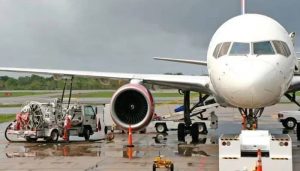 Despite a pricing advisory by the Nigerian Midstream and Downstream Petroleum Regulatory Authority (NMDPRA), aviation fuel, Jet-A1, is still being sold to airlines at N2,230 per litre and above, raising fresh concerns across Nigeria’s aviation sector.
The regulator had earlier recommended a price band of N1,760 to N1,988 per litre in Lagos and about N2,037 per litre in Abuja, following stakeholder engagements aimed at easing tensions over pricing.
However, market checks indicate that actual transactions remain significantly higher than the advisory, with airlines continuing to pay well above the benchmark.
Industry sources attribute the disparity to strong demand and the role of intermediaries within the supply chain, who mark up prices between depots and end-users.
Findings show that while Dangote Petroleum Refinery currently sells Jet-A1 at a gantry price of about N1,800 per litre, middlemen lifting the product are pushing prices far beyond the recommended range.
The situation has raised concerns about inefficiencies in distribution and the limits of regulatory influence in a largely market-driven downstream sector.
Reacting, Chief Executive Officer of Petroleumprice.ng, Olatide Jeremiah, called for greater transparency in pricing.
“Dangote Refinery should as a matter of urgency publish its daily jet fuel gantry prices. This would erode abnormal margins by middlemen and help curb artificial hikes that are threatening Nigeria’s aviation sector,” he said.
Airline operators say the rising cost of fuel is significantly increasing operational expenses. Spokesperson for United Nigeria Airlines, Chibuike Uloka, noted that the issue affects all carriers.
“It’s a free market, so the regulator cannot fix prices. They can only suggest based on market realities. But marketers are still selling at higher rates, and no one has called them to order,” he said.
Uloka added that fuel costs per flight have surged sharply, citing figures from operators.
“For instance, Ibom Air’s cost per operation rose from about N2.9 million in January to N7.6 million, while airlines operating larger aircraft spend even more,” he said.
Also speaking, Managing Director of Aero Contractors, Capt. Ado Sanusi, stressed the need for a transparent pricing framework.
“We should know what Dangote is selling at and what importers’ landing costs are. From there, a benchmark can be established so that no one takes undue advantage of airlines,” he said.
Meanwhile, the Aviation Round Table Initiative (ARTI) has called for urgent government intervention, warning that sustained high fuel prices could cripple domestic carriers.
In a letter to President Bola Tinubu and key aviation authorities, the group proposed a temporary Jet-A1 price stabilisation mechanism and emergency financial support for airlines.
“To stabilise the system, a time-bound Jet-A1 refund mechanism is needed. This is not a subsidy but a temporary parity-restoration measure,” the group said.
It also recommended low-interest loans, working capital support, and broader reforms to improve transparency and reduce structural costs in the aviation sector.
Stakeholders warned that unless supply chain inefficiencies and pricing distortions are addressed, rising fuel costs could translate into higher airfares and increased pressure on the industry.