

NGE, NUJ, SERAP demand probe of Wike over ‘threat’ to journalist
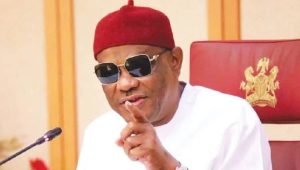 Pressure is mounting on the Federal Government to investigate the Minister of the Federal Capital Territory, Nyesom Wike, following a controversial remark directed at Channels Television anchor, Seun Okinbaloye.
The Nigeria Guild of Editors (NGE), Nigeria Union of Journalists (NUJ), and the Socio-Economic Rights and Accountability Project (SERAP) on Monday jointly condemned the comment, describing it as a dangerous threat to press freedom.
Wike, during a media chat in Abuja, had reportedly said, “If there was any way to break the screen, I would have shot him,” while reacting to a question raised by the journalist on concerns that the 2027 elections may tilt towards a one-party state.
In a joint statement signed by NGE President Eze Anaba, General Secretary Onuoha Ukeh, and SERAP Deputy Director Kolawole Oluwadare, the groups warned of a worsening media environment in Nigeria.
“We are seriously concerned that press freedom is in a ‘downward spiral,’ with increasing intimidation, harassment, threats, and attacks against journalists,” Anaba said.
The organisations stressed that public officials must tolerate scrutiny, noting that Okinbaloye was within his rights to ask critical questions.
“Like every individual, Okinbaloye is entitled to… freedom of expression… including information of public interest,” the statement read, adding that even views that “shock, offend or disturb” are protected under the law.
While acknowledging that Wike had attempted to clarify his remark, the groups insisted the statement should never have been made.
“The objective of those who threaten journalists… is to chill public interest reporting,” they said, warning that such conduct undermines democratic accountability.
They called on President Bola Tinubu to order a full investigation and ensure those responsible are “cautioned, disciplined or prosecuted,” while also urging a public reaffirmation of the government’s commitment to media freedom.
The NUJ, in a separate statement by its President, Alhassan Yahya, described Wike’s comment as “reckless and violent.”
“It constitutes a direct and unacceptable attempt to intimidate and silence the press,” Yahya said, adding that the absence of an apology suggests the remark was deliberate.
The union warned that such statements from senior officials could create fear and discourage critical journalism.
“This… creates a climate of fear for journalists striving to uphold their professional duties,” he said.
Also weighing in, the Human Rights Writers Association of Nigeria (HURIWA) petitioned the United States Government, calling for possible sanctions against Wike over what it described as a pattern of actions undermining democratic norms.
The group alleged electoral misconduct, suppression of opposition, and undue political influence, warning that Nigeria’s democratic space is shrinking.
It urged the US to consider measures such as visa restrictions if the allegations are substantiated, noting that any erosion of democracy in Nigeria could have broader regional implications.
The controversy comes amid growing concerns over press freedom in Nigeria, with rights groups citing rising cases of intimidation, legal harassment, and attacks on journalists.
Stakeholders say how the government responds to the Wike incident could signal its broader commitment to protecting media independence and democratic values.