

Ekiti 2026: One-Horse Race Looms as Oyebanji Consolidates Grip
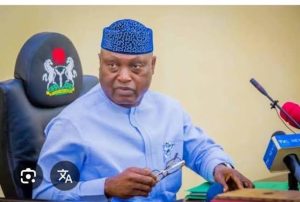 Barring any last-minute political upset, the June 20, 2026 governorship election in Ekiti State is increasingly shaping into a one-horse race, with Governor Biodun Oyebanji consolidating his dominance amid a weakened opposition.
Political observers and stakeholders across the state say early indicators point to a contest lacking traditional competitiveness, as opposition parties grapple with internal crises, weak structures and dwindling influence.
As campaigns gradually gather momentum, analysts note that the race appears driven more by political alliances, patronage and strategic realignments than by clear ideological differences.
The Independent National Electoral Commission (INEC) has cleared 12 political parties for the poll, with Oyebanji of the All Progressives Congress (APC) facing candidates from the Peoples Democratic Party (PDP), African Democratic Congress (ADC), Labour Party (LP) and other smaller parties.
Among the candidates are Opeyemi Falegan (Accord), Oluwasegun Akande (AAC), Oluwadare Bejide (ADC), Ojo Ayodeji (ADP), Olanrewaju Anifowose (APM), Oyebanji Olajuyin (LP), Olaniyi Ayodele (PRP), Damilola Adetunji (ZLP), Olusegun Osinkolu (YPP) and Blessing Abegunde (NNPP), alongside their respective running mates.
Since assuming office in October 2022, Oyebanji has leveraged incumbency advantage, sustained grassroots engagement and a broad coalition of political heavyweights to strengthen his re-election bid.
His administration’s regular payment of salaries and pensions, alongside infrastructure projects and social intervention programmes, has boosted his visibility across the state.
The governor’s “shared prosperity” agenda—focused on infrastructure, agriculture, human capital development and governance—has further entrenched his presence at the grassroots.
In a rare political alignment, Oyebanji has also secured the backing of past governors across party lines, including Niyi Adebayo, Segun Oni, Ayodele Fayose and Kayode Fayemi—an alliance analysts describe as unprecedented in Ekiti’s political history.
However, observers warn that while the governor appears firmly in control, the strength—or weakness—of the opposition will ultimately determine whether the election becomes a true contest or a mere formality.