

2024, 2025 Budgets Suffered From Unrealistic Revenue Projections — Adedeji
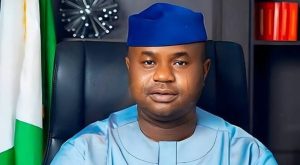
The Executive Chairman of the Nigeria Revenue Service, Mr. Zacch Adedeji, yesterday attributed the poor performance of the 2024 and 2025 budgets to unrealistic revenue projections, warning that the trend would persist unless estimates are aligned with actual earnings.
Adedeji spoke at the National Assembly during a budget defence session before the Senate Committee on Appropriations, where he fielded questions over the widespread poor and, in some cases, zero capital releases to Ministries, Departments and Agencies, MDAs, under the two fiscal years.
According to him, budget implementation is fundamentally tied to credible revenue forecasts.
“Budget funding must come from realistic projections. Efficiency is not about the size of the budget but about how much of it can actually be implemented.
“If you think you have ten units and spend accordingly, that is manageable. But if you assume you have one hundred and spend based on that assumption, you may run into serious problems if the funds do not materialise,” he said.
Adedeji faulted the heavy dependence on projected inflows from the Nigeria National Petroleum Company Limited, NNPCL, noting that the company now operates as a limited liability entity.
“NNPCL is now a limited liability company. It is no longer a government corporation in the traditional sense. The connection between NNPCL and the Federation is through taxes and royalties.
“Whether they produce two million or three million barrels per day, what directly impacts Federation revenue are the taxes and royalties paid,” he explained.
He added that production costs must also be factored into projections, pointing out that slim profit margins in the oil sector limit revenue inflows.
“The gap between projected and realised oil revenue is wide. For example, how do we explain 18 per cent performance in one year and projections of 36.5 per cent the next year when actual performance is still below expectations?” he queried.
The NRS boss maintained that no budgeting model would succeed where projected revenue far exceeds actual earnings.
“If one naira is available and there is a twenty-naira liability, decentralisation will not solve the gap. Realistic budgeting is the starting point,” he added.
However, Chairman of the Senate Committee on Appropriations, Senator Olamilekan Adeola, said the budget document originated from the executive arm and was backed by timelines approved by the President.
“This document before us originated from the executive. The projections and challenges came from the executive arm, not the legislature.
“So the question is: Do we reduce the budget, or do we proceed and make adjustments?” Adeola asked.
He also identified rising debt financing as a major constraint to effective implementation, urging the Federal Government to consider asset disposal as a means of reducing borrowing and lowering future debt servicing costs.
Meanwhile, Minister of Budget and Economic Planning, Atiku Bagudu, Minister of Finance and Coordinating Minister of the Economy, Wale Edun, and Minister of State for Finance, Doris Uzoka-Anite, were also present at the session.
Responding to concerns, Edun said capital components of the 2024 and 2025 budgets were still being funded, though lawmakers expressed dissatisfaction with his explanations.
Uzoka-Anite, however, disclosed that the Federal Government had commenced the release of funds for the 2024 capital budget.
“Payments for outstanding 2024 capital projects start today. The financial management system is back online.
“For 2025, MDAs have been directed to upload their cash plans by Monday, after which payments will begin. We are ready to start, but the MDAs must complete their documentation requirements,” she said.
She assured lawmakers that full implementation of the 30 per cent capital component of both budgets would be achieved before March 31, 2026.
In a related development, the Minister of Culture, Tourism and Creative Economy, Hannatu Musawa, told the Senate Committee on Culture and Tourism that her ministry received only N28 million out of its N13 billion capital allocation.
Members of the committee expressed concern over the development, noting that several MDAs, including the Ministries of Health, Education, Power, Solid Minerals Development and Agriculture, had reported either zero or minimal capital releases.
The Senate Chief Whip, Senator Tahir Monguno, had earlier decried the zero capital release to the Ministry of Defence and other security agencies, describing it as inconsistent with the Federal Government’s stance on national security.
“It is high time the government prioritised security funding. The President cannot declare emergency in the security sector while security agencies receive zero capital release. That amounts to paying lip service to national security,” Monguno said.
Investigations by various Senate committees in recent weeks have revealed that several MDAs received either no capital releases or funds late in 2025, making implementation practically impossible.
Lawmakers warned that unless revenue assumptions are made more realistic and releases improved, the workability of the proposed N58.472 trillion 2026 budget could also come under serious strain.