

Soludo to South-East youths: Join security services, end self-marginalisation
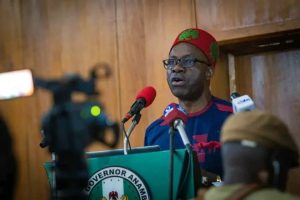
Governor Chukwuma Soludo of Anambra State has urged youths from the South-East to put the memories of the Civil War behind them and embrace careers in the nation’s security services, warning that continued apathy amounts to self-exclusion from Nigeria’s power structure.
The governor spoke in Awka last Thursday during the 2026 Armed Forces Remembrance Day ceremony, where he lamented the poor participation of Igbo youths in the military, police and allied agencies. According to him, the development threatens the long-term influence of the zone in national affairs.
Soludo’s remarks, however, drew mixed reactions on social media. While many commended the call, some critics mockingly asked the governor to first enlist his own children in the armed forces. Others questioned why he was not encouraging applications to “juicier” agencies such as the Central Bank of Nigeria, the Federal Inland Revenue Service and the NNPC.
The governor dismissed such arguments, insisting that public institutions are meant for service and nation-building, not avenues for quick wealth. He noted that those seeking riches should look towards private enterprise rather than government payrolls.
Experts say Soludo’s position is backed by verifiable data. Figures released by the Police Service Commission during the 2023/2024 constable recruitment exercise showed a disturbing gap between the South-East and other regions. Kaduna and Adamawa recorded over 40,000 and 36,000 applicants respectively, while none of the five South-Eastern states could muster 10,000.
Anambra posted the lowest figure with 1,664 applicants, Ebonyi had 2,132 and Abia 2,796. In 2021, only 2,932 of the 124,000 shortlisted police recruits nationwide came from the South-East—the poorest showing among the six geopolitical zones. SBM Intelligence similarly ranked the region last in police recruitment between 2017 and 2021.
The Nigerian Army has faced the same challenge. Enugu State produced just 73 and 49 recruits for the 82nd and 83rd intakes against a quota of 150. In 2022, Anambra accounted for only 158 of more than 81,000 applicants nationwide. Military authorities disclosed that in the 2025 exercise, barely 200 youths from the zone registered, forcing repeated extensions of deadlines and lowered cut-off marks to meet federal character requirements.
Analysts attribute the apathy to several factors. The activities of “unknown gunmen” and separatist groups have made security work appear dangerous in the region, with recruits sometimes labelled traitors. Others cite fears of discriminatory postings and a perceived glass ceiling that prevents Igbo officers from rising to top command positions.
Economic considerations also play a role. Many young people prefer the region’s thriving entrepreneurial culture to the modest salary of a constable or private soldier.
Soludo, however, insisted that avoiding the services only deepens marginalisation. “Today’s recruit becomes tomorrow’s Inspector-General or Chief of Army Staff,” he noted, stressing that absence at entry level automatically shuts the door to leadership.
He called on traditional rulers, community leaders and parents to encourage interested youths, while urging the Federal Government to ensure fairness in postings and promotions to rebuild trust.
“The Nigeria of our dream can only emerge when every part of the country participates fully in its institutions,” the governor said, describing his appeal as a necessary wake-up call for Ndi Igbo.