

Global Outrage as Russia, China, EU Condemn U.S. Military Action in Venezuela
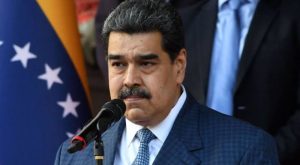
Russia, China, the European Union and several governments across Europe, Latin America, Asia and the Middle East have strongly condemned the United States’ military strikes on Venezuela and the reported capture of President Nicolás Maduro, describing the action as a violation of international law and a threat to global stability.
In a statement on Saturday, Russia’s Foreign Ministry accused Washington of committing “an act of armed aggression against Venezuela,” warning that the strikes were “deeply concerning and condemnable.”
Moscow rejected the justification offered by the United States, insisting that the reasons advanced for the operation were “unfounded” and driven by “ideological animosity rather than pragmatism.” Russia urged restraint, warning against further escalation and stressing that “Latin America must remain a zone of peace.”
The Russian government also called for an emergency meeting of the United Nations Security Council, insisting that Venezuela must be guaranteed “the right to determine its own destiny without military interference from outside.”
China also reacted sharply. The Ministry of Foreign Affairs said Beijing was “deeply shocked and strongly condemns the blatant use of force by the United States against a sovereign state and its president.”
According to China, the strikes amounted to “hegemonic behavior,” constituting “a serious violation of international law, an infringement on Venezuela’s sovereignty, and a grave threat to regional and international peace.”
The United Nations Secretary-General, António Guterres, through his spokesperson, said he was “deeply alarmed” by the developments, warning that the U.S. action risked setting “a dangerous precedent.”
He emphasized that “full respect by all parties for international law, including the UN Charter, is essential,” and urged dialogue and restraint to prevent further destabilisation.
The European Union adopted a cautious tone. European Commission President Ursula von der Leyen said she was “closely following the situation in Venezuela,” noting that while the EU stood with the Venezuelan people and supported a peaceful democratic transition, “any solution must respect international law and the UN Charter.”
EU foreign policy chief Kaja Kallas confirmed she had spoken with U.S. Secretary of State Marco Rubio and the EU Ambassador in Caracas, stressing that although the EU had consistently questioned Maduro’s legitimacy, “the principles of international law must be respected under all circumstances.”
She added that the safety of EU citizens in Venezuela remained a top priority.
British Prime Minister Keir Starmer said the United Kingdom was not involved in the operation and would first seek to establish the facts. He reaffirmed the UK’s commitment to international law while noting the rapidly evolving nature of the situation.
UK Conservative leader Kemi Badenoch also urged caution, saying she would not rush to judgment on what she described as an “extremely serious and fast-moving situation.”
Across Latin America, Chilean President Gabriel Boric condemned the U.S. military action and called for a peaceful resolution to Venezuela’s crisis, reaffirming his country’s commitment to non-intervention and respect for territorial integrity.
Colombian President Gustavo Petro expressed “deep concern” over reports of explosions and unusual air activity in Venezuela, rejecting unilateral military action that could endanger civilians.
Trinidad and Tobago’s Prime Minister, Kamla Persad-Bissessar, clarified that her country was not involved in the military operations and maintained peaceful relations with Venezuela.
Reactions also came from the Middle East and Asia. Iran’s Supreme Leader, Ayatollah Ali Khamenei, framed the strikes as part of what he called U.S. imperial aggression, urging resistance. Indonesia called for de-escalation and dialogue, while Belarus described the action as “armed aggression” and pledged support for Venezuela’s government.
Within the United States, former House Speaker Nancy Pelosi criticised the operation, arguing that the administration had failed to demonstrate an imminent national security threat and had bypassed Congress’ war powers.
Venezuela has formally requested an emergency meeting of the UN Security Council as international concern continues to mount over the implications of the U.S. military intervention.