

U.S. Intervention In Nigeria’s Terror War Came Late — Sowunmi
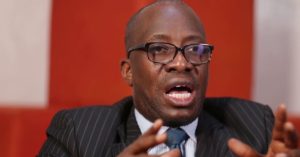
A former spokesman for Peoples Democratic Party (PDP) presidential candidate in the 2023 election, Segun Sowunmi, has said the international community, particularly the United States, responded too late to Nigeria’s escalating terrorism crisis.
Sowunmi made the assertion during an interview on Channels Television’s Sunday Politics while reacting to recent U.S. airstrikes on suspected terrorist camps in northwestern Nigeria.
According to him, global powers possess sufficient intelligence and surveillance capacity to have intervened much earlier.
“I felt the world came in a little too late,” Sowunmi said. “The security resources available globally suggest that many countries already have eyes in the skies and the capability to act.”
While acknowledging the U.S. intervention, he expressed disappointment over the silence of other major international stakeholders.
“You must thank the United States when the chips were really down. But Britain, which ordinarily should have a bigger interest, didn’t say anything. China, which has been active here through several projects, also said nothing. America eventually said something, and President Donald Trump decided that the situation had become too much,” he stated.
Sowunmi described Nigeria’s security situation as deeply painful, stressing that the fight against terrorism should not be celebrated.
Drawing an analogy, he said: “As a parent, you won’t stand by and watch even your wayward child get killed. This is not a happy moment for Nigerians.”
He noted that Nigeria was fortunate the U.S. coordinated the operation with Nigerian security agencies, warning that unilateral action would have exposed the country’s weak deterrence capacity.
“Thankfully, the strikes were carried out with our security infrastructure involved. Otherwise, if missiles were fired from the Gulf of Guinea without consultation, what military capability do we really have to deter such actions?” he asked.
Sowunmi urged Nigerians across religious lines to view terrorism strictly as criminality rather than a religious or ethnic issue.
“I think Nigerians, both Muslims and Christians, must understand that this should not be framed along religious or ethnic lines. Terrorism is criminality,” he said.
Recall that on December 25, 2025, U.S. President Donald Trump ordered airstrikes against targets linked to the Islamic State (ISIS) in Sokoto State, near Nigeria’s border with Niger.
The operation, conducted shortly after midnight on Christmas Day, targeted suspected militant camps in the Tangaza axis. U.S. forces reportedly launched between 12 and 16 Tomahawk missiles from naval assets in the Gulf of Guinea, supported by MQ-9 Reaper drones.
Trump described the operation as a “Christmas present” to militants, claiming the strikes “decimated” the camps. While U.S. and Nigerian officials reported significant militant casualties, no independent confirmation has been provided.
The airstrikes followed Washington’s decision in November 2025 to designate Nigeria a Country of Particular Concern (CPC), accompanied by visa restrictions.
Although the Nigerian government confirmed it provided intelligence support for the mission, Trump announced the strikes on social media before Nigeria issued an official statement.
Foreign Affairs Minister Yusuf Tuggar later disclosed that Nigeria and the U.S. had agreed on a joint announcement, which was bypassed by Washington.
Nigerian authorities emphasised that the operation was not religiously motivated and targeted various terrorist groups, including Lakurawa.
Meanwhile, President Bola Tinubu revealed during a meeting with the Christian Association of Nigeria (CAN) in Lagos that Nigeria had sought military support from Turkey following delays in the delivery of U.S.-ordered military hardware, including four attack helicopters.
Sowunmi maintained that Nigeria must take ownership of its security challenges and address terrorism as a national criminal threat rather than a divisive issue.