

U.S. Congress Warns Nigeria Over Blasphemy Death Penalty, Compares It to Iran, Pakistan
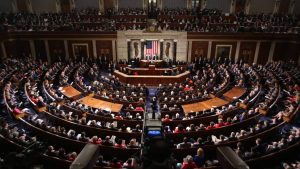
The United States has raised serious concerns over Nigeria’s blasphemy laws, warning that the country risks being compared to Iran and Pakistan for allowing death penalties over religious offences.
Jacob McGee, Deputy Assistant Secretary at the US Bureau of Democracy, Human Rights, and Labour, told a US Congress public hearing on Nigeria’s designation as a “Country of Particular Concern” (CPC) that Nigeria is one of only eight countries globally where blasphemy carries a death sentence.
McGee highlighted the 2022 mob killing of Deborah Samuel Yakubu, a student at Shehu Shagari College of Education, Sokoto, who was lynched over blasphemy accusations. He noted that her killers remain at large, describing the incident as part of a troubling pattern of religiously motivated violence.
“The levels of violence against Christian communities, especially in the Middle Belt, are alarming,” McGee said. “Witnesses confirm that attackers often target Christians directly, using religious language in their attacks. The Nigerian government must uphold its duty to protect vulnerable citizens and hold perpetrators accountable.”
The US official also criticized the Federal Government under President Bola Tinubu for failing to protect religious leaders who speak out, citing Bishop Wilfred Anagbe and Father Remigius, who reported threats instead of protection when testifying before Congress last year.
McGee stressed that Nigeria’s blasphemy laws, enforced under Sharia penal codes in 12 northern states, place the country alongside Iran and Pakistan, both long-designated CPCs. “When authorities detain individuals accused of blasphemy, the judicial process can take years. Meanwhile, mobs often take the law into their own hands with impunity,” he said.
The testimony comes amid former US President Donald Trump’s threat of potential military action in Nigeria over ongoing Christian persecution, a move criticised by Congresswoman Sara Jacobs as “reckless and illegal.” She warned that framing Nigeria’s violence solely as a religious conflict oversimplifies the issue and risks worsening tensions between Christian and Muslim communities.
“The United States remains committed to championing religious freedom,” McGee said, “and will continue to monitor the situation, pressing the Nigerian government to protect its citizens and uphold justice.”